Skip to content
Adobe Certified · Working from Ahmedabad, 2h30 behind SGT

Magento developer in Singapore for stores that sell across SEA

If you need a Magento developer for a Singapore store, I work from Ahmedabad, just two and a half hours behind SGT, so most of your working day is mine too. I set up what Singapore shoppers expect at checkout: PayNow, GrabPay, NETS and cards, with Atome if you want instalments. GST at 9% gets configured properly. And if Malaysia or Indonesia is next on your list, I build the store so a second market is a new store view, not a rebuild.

  • PayNow, GrabPay, NETS and cards on one checkout, tested with a Singapore address
  • PDPA consent kept separate from your order terms, Do Not Call checks on SMS lists
  • GST at 9%, UEN capture for business buyers, room for MYR and IDR later
Daily update around 5 PM SGT SGD quote on request

Your afternoon is my morning

12:30Singapore 10:00Ahmedabad

Standard time. I work 10 AM to 7 PM IST, Monday to Saturday.

Singapore at a glance, for your store

  • PayNow + GrabPay Local ways to pay

    Singapore shoppers scan a QR code or open a wallet about as often as they type a card number. I add PayNow, GrabPay, PayLah! and NETS through one gateway such as Stripe, Adyen or HitPay, so you are not running four separate modules.

  • PDPA Consent done properly

    The PDPA and the Do Not Call registry decide who you can email, text or call. I keep the marketing opt-in apart from the order checkbox and make access and deletion requests easy to handle.

  • GST 9% Since 1 January 2024

    GST went up to 9% at the start of 2024. I check that prices, tax classes and invoices all agree, and that your registration status (the S$1M threshold, or the overseas vendor rules if you sell in from abroad) is reflected in the store.

  • 2h30 Singapore is ahead of me

    My 10 AM to 5 PM in Ahmedabad is 12:30 PM to 7:30 PM in Singapore. A question you send after lunch usually gets an answer the same afternoon.

What you get

Six things a Singapore Magento store actually needs

Many Singapore stores have the same gaps: wallet payments added late, marketing consent buried in the checkout terms, and GST settings nobody checked after the 2024 rate change. These are the six areas I check on a Singapore store.

  • A checkout that fits Singapore

    Cards through Stripe or Adyen, plus PayNow, GrabPay, PayLah!, NETS and Atome for instalments. I test each one in sandbox with a real Singapore postcode before anything goes live, and I leave out the methods your customers will not use.

  • PDPA and Do Not Call

    A separate opt-in for marketing, Do Not Call checks before SMS or phone campaigns, and a simple way to answer a customer who asks what data you hold or wants it deleted. Order records stay intact for your accounts.

  • GST at 9% and UEN for business buyers

    Tax classes, GST-inclusive price display and tax invoices set up for 9%. For B2B customers I capture the UEN at registration so your invoices carry it, and trade accounts can see their own prices.

  • English first, other languages when needed

    Most Singapore stores run in English only, and that is fine. If part of your audience reads Mandarin, Malay or Tamil, I add a store view per language with its own product text and hreflang tags instead of an automatic translation widget.

  • Room to grow into Malaysia, Indonesia and the Philippines

    A lot of Singapore brands start local and then ship to the neighbours. I set up currencies (SGD, MYR, IDR, PHP) and per-country payment options so a new market means a new store view, not a second Magento install. Lazada or Shopee feeds can come later.

  • Fast on the phone in your shopper’s hand

    Most Singapore orders start on a phone, often on the MRT between meetings. I host close to them, usually AWS Singapore with Cloudflare in front, and fix Core Web Vitals on product and category pages before adding new features.

How it works

Five steps from booking to live: on Singapore time

I post a staging update around 5 PM SGT, which is 2:30 PM in Ahmedabad, so you can review it before you leave the office.

Daily overlap, standard time, in Singapore time
Your day 09:00 to 18:00
My hours 12:30 to 21:30
  1. 01

    Brief

    Send a short brief on WhatsApp. I look at your SG store: payment rails, GST 9% setup, PDPA cookie banner, shipping rules (SingPost / Ninja Van / J&T), Core Web Vitals.

    Day 1
  2. 02

    Quote

    Fixed-price written quote in USD with an SGD equivalent on request. Reserved start date, risk register, written project plan. You sign, I book your start date.

    Day 2
  3. 03

    Build

    Daily review at 5 PM SGT typical, right inside your end-of-day window in Singapore. Staging access from day 3 with a real SG postcode test cart and GrabPay sandbox.

    Days 3-14
  4. 04

    Deploy

    The cutover time and the rollback plan are agreed with you in writing before launch.

    Launch
  5. 05

    Stabilise

    After launch I check the live store in SGT business hours. PDPA-aligned incident response if needed.

    After launch

Your quote

Get a fixed quote for your project

Send your store URL and describe what you want to change. We can review the requirements and agree a written scope, quote and timeline before work starts.

  • Written scope, price and timeline
  • You approve every change
What clients say

What clients say about working with me

Reviews from clients on Upwork. They come from several countries, and the way I work is the same for every store.

Magento work and feedback View Upwork profile

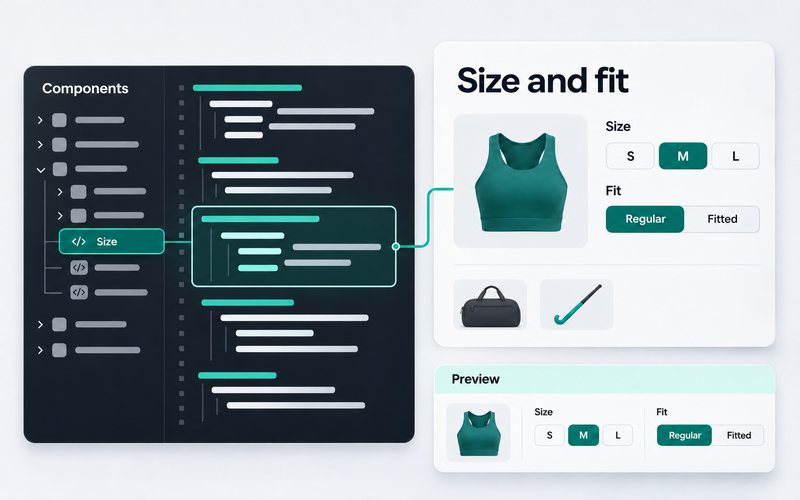
  • Illustration of Magento 2 development work for a sports footwear and hockey shop
    Sports footwear and hockey shop, Netherlands
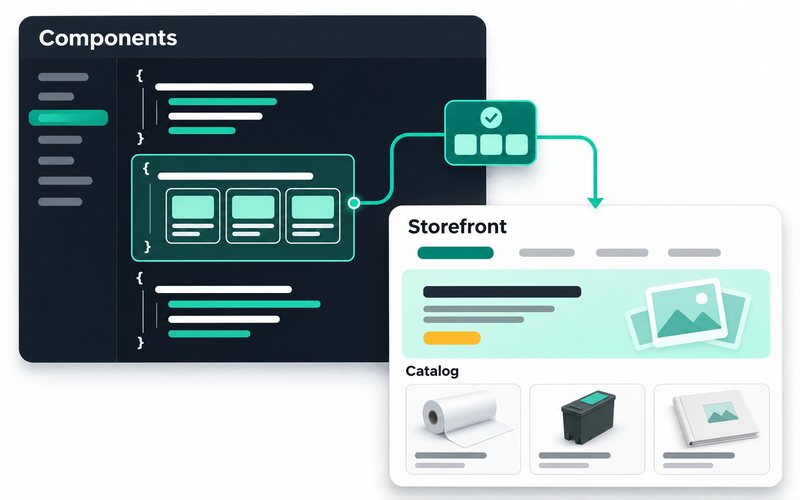
  • Illustration of Magento 2 development work for a photo printing supplies wholesaler
    Photo printing supplies wholesaler, Netherlands
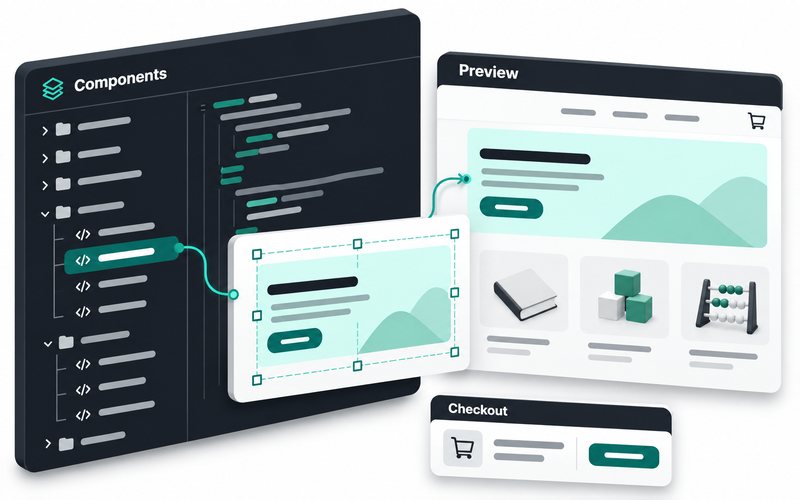
  • Illustration of Magento 2 development work for an educational toys and books shop
    Educational toys and books shop
  • Kishan has done an excellent job in a timely manner. He is very knowledgeable, has a very positive attitude, easy to communicate.

    Z. K.Magento 2 client
  • He is technically strong, approaches problems thoughtfully, and focuses on stable, long-term solutions.

    E. H.Magento 2 client
  • Kishan was a pleasure to work with! He is highly skilled, professional, and delivered outstanding results on time.

    M.Magento 2 client
FAQ

Twelve Singapore-specific questions, honestly answered

How do I integrate GrabPay with my Magento 2 store?

GrabPay is the regional dominant mobile wallet across SEA, if your SG store doesn’t accept it, you’re leaving 25-40% of mobile checkouts on the table. Two integration paths:

  • Direct GrabPay Magento module, OAuth + redirect-flow checkout, native to Magento order grid. Best for pure SG / SEA stores.
  • Via Stripe Singapore or Adyen, GrabPay surfaces as a payment method alongside cards / Apple Pay / Atome. One integration, one settlement, one reconciliation. Best for multi-rail stores.

We wire merchant credentials, sandbox + production, webhook listeners for payment_intent.succeeded, and refund / partial-refund flows. Reconciliation lands in your accounting software with SGD breakdown + GST 9% line item.

PayLah! vs GrabPay vs Stripe SG, which payment rail should I use?

Pick by use case, most SG stores run two or three rails simultaneously:

  • GrabPay, regional dominant, best for SEA cross-border (covers MY / ID / PH / TH too). Higher fees (2-3%) but huge demographic reach.
  • PayLah! (DBS), Singapore-first mobile rail, dominant with DBS / POSB customers (~5M users). Lower fees, instant settlement to DBS business accounts. Best for pure-SG stores.
  • Stripe Singapore, best developer experience, multi-currency (SGD / USD / MYR / IDR), card + Apple Pay + Google Pay + Atome BNPL all unified. Slightly higher base rate.
  • Adyen, enterprise / multi-region. One contract for SG + EU + APAC, unified reporting.

Most pure-SG DTC stores run Stripe SG + GrabPay + PayLah! as a three-rail stack. SEA hubs add Adyen for unified regional reporting.

What is PDPA and how do I comply in Magento?

The Personal Data Protection Act 2012 (revised 2021) is Singapore’s GDPR-equivalent. Three layers to wire into Magento:

  1. Consent & notification, explicit opt-in for personal-data collection. Cookie banner with granular toggles (essential / analytics / marketing). We integrate Cookiebot / Usercentrics / Klaro with Magento’s native cookie API + GTM.
  2. DNC (Do-Not-Call) registry, before any SMS / WhatsApp / call marketing, scrub against the SG DNC list. Wire via API on outbound campaigns.
  3. DSAR / deletion / portability, customers can request access, correction, deletion of their data. We build admin tools + automated flows in customer + sales_order tables.

Plus Spam Control Act for unsolicited commercial email (opt-in + unsubscribe + sender ID), and MAS guidelines if you’re fintech-adjacent (BNPL, crypto-tangential, regulated payments).

How does GST 9% + OVR work for my Magento store?

GST in Singapore is now 9% (raised from 7% in two stages: 7% → 8% in Jan 2023, 8% → 9% in Jan 2024). Three scenarios:

  • SG-registered seller, mandatory GST registration above S$1M turnover. Charge 9% on B2C, zero-rate exports. UEN + GST number visible on invoices.
  • SG seller below S$1M, voluntary registration possible (good for input-tax claims). Otherwise no GST charged.
  • Foreign seller (OVR), Overseas Vendor Registration required if selling digital services + low-value goods (≤ S$400) into SG above S$100k turnover. Register with IRAS, charge 9% GST, file quarterly returns.

We rebuild Magento’s tax engine with these rules, validate UEN + GST numbers via IRAS API for B2B counterparties (zero-rate B2B exports), and wire MTD-equivalent reporting to Xero / QuickBooks SG.

Can I use my Singapore Magento as a SEA hub for MY / ID / PH / TH?

Yes, this is the most common Singapore Magento pattern. Singapore is the natural SEA HQ for ecommerce: stable currency, English-primary, AWS / Azure / GCP all have SG regions, fintech-friendly regulation. Three architectures:

  • Single-store, multi-currency, one storefront (SGD primary) with currency switcher (MYR / IDR / PHP / THB). Cheapest. Geo-IP suggests local currency. Good for < S$5M stores.
  • Multi-storefront, shared catalogue, one Magento backend, separate storefronts per country (sg.example.com, my.example.com, id.example.com). Local payment methods per region (GrabPay covers most), local fulfilment, local language. Most popular for S$5M to S$50M.
  • Multi-website, separate backends, legally separate Pte Ltd entities for tax / regulatory reasons. Best for enterprise / regulated verticals.

All three are workable. Lazada / Shopee storefront integration is layered on top, Magento as source-of-truth, marketplace listings synced via API.

How do I validate UEN for B2B customers in Magento?

UEN (Unique Entity Number) is Singapore’s business identifier, mandatory for every registered company, society, and government entity. For B2B Magento stores, UEN validation gates trade-account registration. Two approaches:

  • Format validation, regex check on the UEN format (9-digit business, 10-digit local company, 10-digit foreign company, etc.). Catches typos but doesn’t verify existence.
  • Live API validation, we wire to ACRA BizFile API (Singapore’s Companies Registry) to verify UEN + entity name + status (active / struck-off). Cached for 24h.

For Adobe Commerce B2B, this slots into company table as a custom attribute. Approval workflow: customer registers with UEN → auto-validate → admin approves → trade pricing enabled. We also add GST-number validation for input-tax claim invoicing.

What’s the best hosting for Singapore Magento, AWS Singapore or Vodien?

Depends on your volume + regulatory needs:

  • AWS Singapore (ap-southeast-1), gold standard. Auto-scaling, CloudFront edge, < 20ms latency to all SG postcodes. Multi-AZ failover. Best for S$5M+ stores. Costs S$800 to S$5,000+ /mo depending on traffic.
  • Microsoft Azure SG / Google Cloud SG, comparable to AWS, sometimes cheaper credits / commitment-tier pricing. Good if you’re already on those clouds for other workloads.
  • Vodien, SG-based managed Magento hosting. Cheaper (S$300 to S$800 /mo), excellent SG support in SGT hours, good for S$500k to S$5M stores. Less auto-scaling.
  • Exabytes / DigitalOcean SG, mid-market, predictable billing, good for pre-launch and starter stores.
  • Adobe Commerce Cloud (Sydney with SG edge via Fastly), if you’re on Adobe Commerce already.

We help benchmark + migrate, the right answer depends on your traffic shape, peak events (CNY / Great Singapore Sale / 11.11), and PDPA data-residency preferences.

Should I add Mandarin / Malay / Tamil for my SG storefront?

Depends on your audience, EN is enough for most SG DTC stores targeting CBD / Orchard professional segments. Add languages strategically:

  • Mandarin (zh-Hans-SG), recommended if you sell to older demographics, FMCG, traditional retail, or cross-border to MY / China. Adds ~20% addressable market in SG.
  • Malay (ms-SG), recommended if you serve halal / Islamic-finance / cross-border to MY / ID. Limited within SG itself but big regional lever.
  • Tamil (ta-SG), niche but valued for inclusion in some segments (services, government suppliers). Often a brand-positioning move.

Magento implementation: separate store_view per language, locale-aware structured data, hreflang per language code (en-SG, zh-Hans-SG, ms-SG, ta-SG). Per-store-view product attributes + URL-slug translations. We can phase this in, ship EN first, layer Mandarin in v2.

How do I integrate Atome BNPL with Magento?

Atome is the SEA-native BNPL leader, Pay-in-3 for SG / MY / ID / PH / TH / VN / HK. A/B test it on AOV > S$100 orders in SG fashion / lifestyle / electronics. Two integration paths:

  • Direct Atome Magento module, native to order grid, supports Pay-in-3 + Pay-in-4 (Atome Plus). Best for pure-SG stores, faster settlement.
  • Via Stripe Singapore, Atome surfaces alongside cards / Apple Pay / GrabPay. One integration, one settlement. Best for multi-rail stores.

We wire merchant credentials, sandbox / production, on-site widgets (PDP price-line: “or 3 × S$XX with Atome” + cart + checkout), MAS-required disclosure copy, and the affordability checkpoint that came in 2024 with the SG BNPL Code of Conduct. Refunds + partial refunds + dispute flows handled.

What time-zone overlap can I expect working with you from India?

Real, daily, 5-7 hours of working overlap, one of the best of any country we work with:

  • India Standard Time = UTC+5:30
  • Singapore Standard Time = UTC+8 (no DST)
  • Overlap window: 10 AM to 5 PM IST = 12:30 PM to 7:30 PM SGT.

That covers your full afternoon and end-of-day. Daily 5 PM SGT review on staging is the typical cadence, lands in the back-half of your working day, gives us the morning IST to ship fixes overnight (your time). Slack / WhatsApp async covers the rest. I am available to Orchard luxury, CBD B2B and Tampines DTC stores, working remotely from Ahmedabad, India.

Should I migrate to Hyvä for my Singapore lifestyle / luxury DTC store?

Almost certainly yes if you’re on Luma. SG mobile shoppers are demanding, Orchard luxury, Tampines lifestyle DTC, Bishan home + lifestyle, all convert dramatically better on fast Hyvä:

  • Lighthouse 95+ on Hyvä vs typically 40-60 on Luma fashion / luxury themes. Google ranks fast pages higher for category / PDP queries.
  • Hyvä Checkout loads in < 1s, which tends to lower bounce vs Magento Luma checkout. Big lever for SG luxury where AOV > S$200 typical.
  • GrabPay / PayLah! / Atome widgets render natively without the React/jQuery double-render Luma has. Mobile experience finally feels like an app.
  • Multi-language EN / Mandarin / Malay, Hyvä multi-store ready out of the box. Cross-border SEA-hub friendly.

The timeline is set in the written quote, after we agree the scope. A faster storefront usually helps conversion, so measure it on your own store over the first 90 days after launch. See our Hyvä service page for what a build covers.

How do I handle SingPost vs Ninja Van vs J&T Express in Magento?

Most SG stores need 2-3 carriers for cost optimisation + delivery promise:

  • SingPost, cheapest for low-weight (< 2kg), local-Singapore mailboxes, postal-code-friendly. Better for non-urgent / standard delivery.
  • Ninja Van, SEA leader, strong tracking + same-day urban (CBD / Orchard / Marina Bay). Native Magento module. Cross-border to MY / ID / PH built-in.
  • J&T Express, cheapest 2-5kg in SEA, dominant in MY / ID. Good for cross-border SEA hub fulfilment.
  • DHL Singapore / FedEx Singapore, international + premium next-day. Native Magento via DHL / FedEx APIs.
  • Qxpress, good fallback for ecommerce parcel volume.

We integrate via ShipperHQ (rule engine) or direct carrier modules, rule-based routing by weight, postcode (HDB vs condo vs CBD), value, and delivery promise (same-day / next-day / 2-day). Booking labels auto-generated from Magento order grid; tracking webhooks update sales_order. Cross-border to MY / ID via Lazada / Shopee storefronts as a parallel channel.

Book your slot

Reserve your Singapore Magento project slot

Send me a short WhatsApp message. I reply with a written quote.

Message me on WhatsApp

No form to fill. Send me a quick message. I reply during 10 AM to 7 PM IST, Monday to Saturday.

Helpful to mention

  • Company
  • Store URL
  • Magento version
  • Target markets
  • Do you have a UEN
  • GST registered

These are already in the message for you. Just add your answers.

Message me on WhatsApp

Or save my number: +91 84012 70422

Your hours, my overlap Online 10 AM to 7 PM IST Get my quote