Before vs After: The New Life of Developers, Designers & IT Teams (And What's Next in 5-10 Years)
How daily work flipped for developers, designers, and IT teams, and what the next 5 to 10 years hold. Honest, simple, and a little funny.

One day work felt normal. The next, the same job had a quiet new helper sitting next to us. No big announcement. No fireworks. The world just quietly flipped, and most of us only noticed weeks later.
In this post, I want to walk you through the "before vs after" of tech work, role by role: developers, designers, QA, DevOps, sysadmins, and IT support. Then we will look ahead at the future of IT careers and what the next 5 to 10 years could really feel like.
The tech world just quietly flipped
Here is the honest truth. The change did not arrive with a loud bang. It crept in. One week we were Googling error messages. The next week, a tool was reading the error for us and offering a fix before we finished our coffee. Surveys suggest most developers now lean on AI tools every single day, and many teams say they ship work much faster than before.
But faster is only half the story. The deeper change is in how the day feels. Less grunt work. More thinking. Fewer hours lost to tiny repeats, and more time on the parts that need a real human brain. That is the "before vs after" we are talking about, and it touches every seat in the room.
So let us not stay general. The best way to see this is up close, one job at a time. Let's go role by role, starting with the people who write the code.
Developers: from typing every line to directing the work
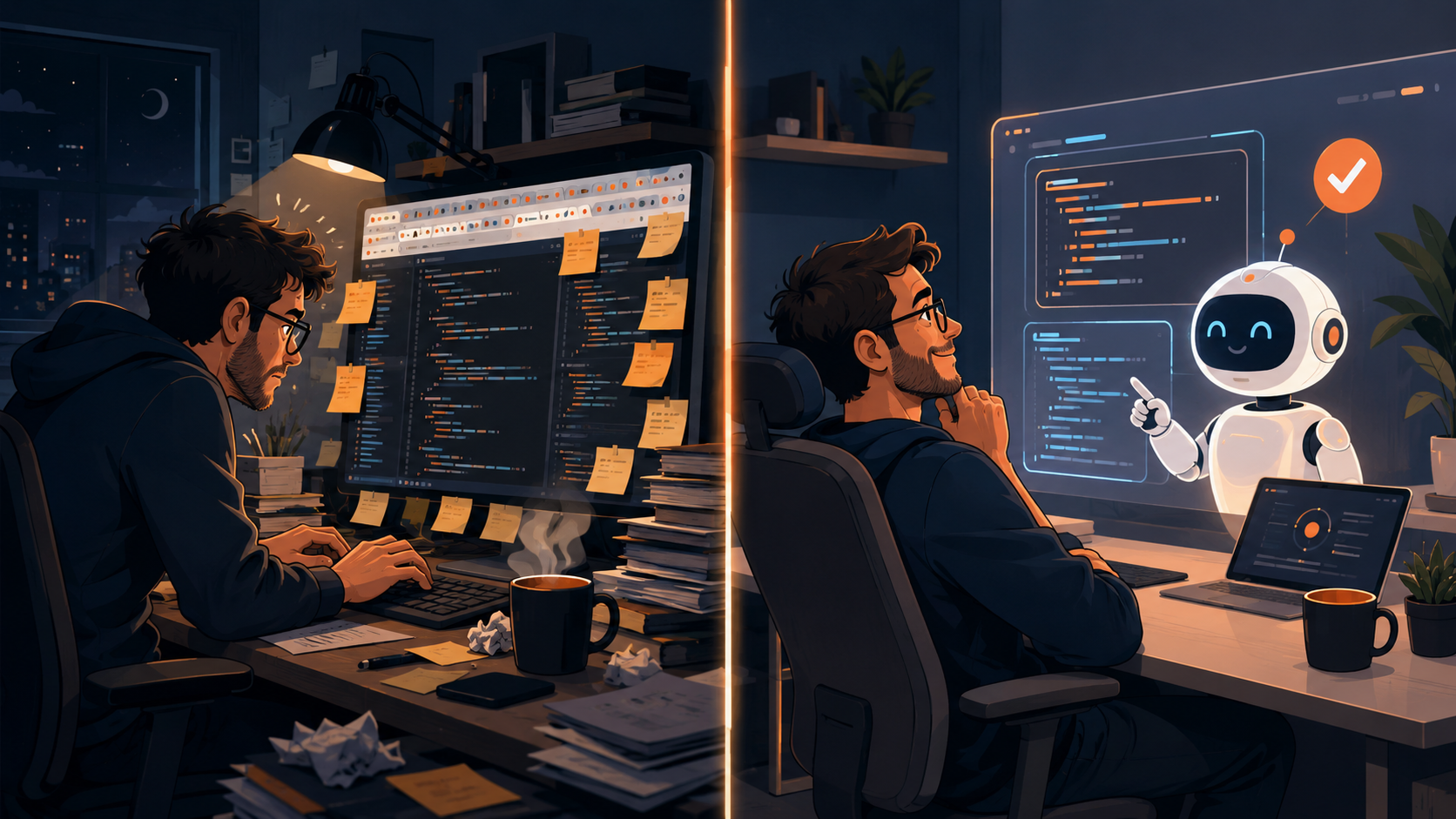
Not long ago, a normal coding day went like this. You opened your editor and typed everything by hand. Boilerplate, config, the same setup you'd written a hundred times before. When something broke, you copied the error into Google and opened twelve tabs. At 1am you were on Stack Overflow, pasting an answer from 2014 and praying it still worked.
The day looks different now. I've watched my own workflow change. AI coding tools write the first draft, and I read it like a senior dev reviews a junior's pull request. I steer it, fix what it gets wrong, and spend more time on the parts that actually matter: the design, the tricky edge cases, the "what happens when the network drops" questions. The typing got faster. The thinking got bigger.
So, will AI replace developers? In my honest experience, no. The AI is a fast, eager junior teammate. It writes a lot, but it doesn't know your business, your weird legacy code, or why that one cron job must never run twice. You still own the decisions. It just hands you a head start.
| Task | Before | After |
|---|---|---|
| Boilerplate code | Typed by hand | Generated in seconds, you review it |
| Debugging an error | Paste it into Google, open 12 tabs | Ask the AI, then verify the fix yourself |
| Writing tests | Skipped because "no time" | Drafted fast, you check the edge cases |
| Learning a new framework | Days of docs and tutorials | Ask questions live while you build |
| Code review | Slow, line by line | AI flags the obvious stuff, you judge the rest |
| Writing docs | Last thing, often never | First draft in minutes, you make it true |
The future of software developers isn't about who types fastest. The job moved from "writing code" to "deciding what good code is", and knowing when the AI is confidently wrong.
These days "it works on my machine" has quietly become "it works on my AI's machine." The rubber duck finally got a co-worker who talks back. And honestly, nobody is shedding a tear over fighting a webpack config ever again.
Designers: from pushing pixels to shaping experiences
Before AI design tools, the work was slow. A designer would hand-craft one mockup, pixel by pixel. Then came the feedback rounds: "make the logo bigger," "try another blue," "move that button up." Each change meant manual resizing and a fresh export. Days could pass before one screen felt right.
Now the same designer can generate many layout options in seconds. AI design tools spit out 20 directions while you sip your coffee. So the job shifts. Less time making one mockup. More time on taste, research, and deciding which idea is actually right for real people.
Here is the honest part. AI makes options. Humans make judgement calls. The future of web design is not "the computer designs everything." It is a person who knows the brand feeling, understands the customer, and picks the option that fits. The machine is fast. The taste is still yours.
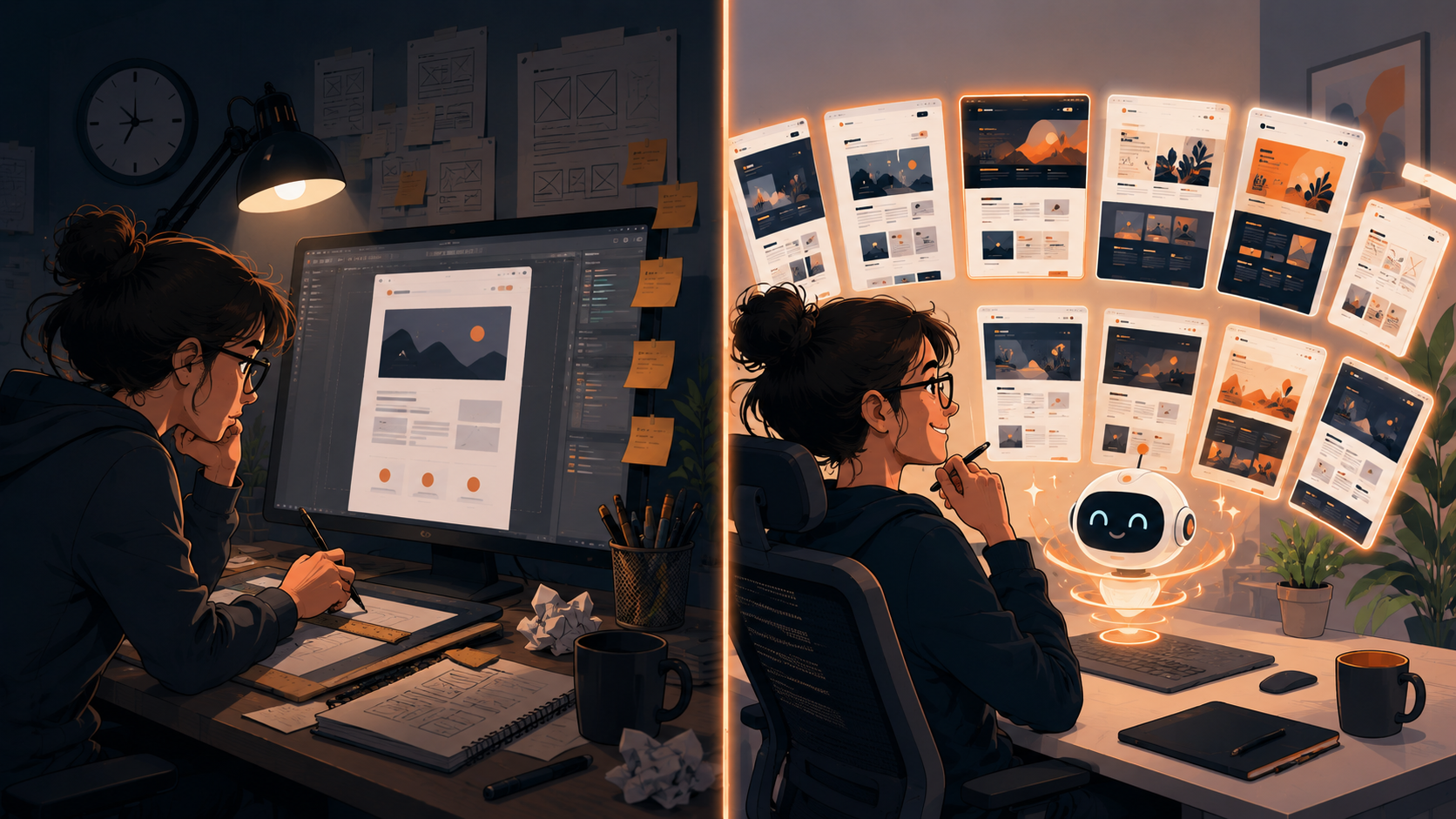
Taste, judgement, and understanding people, not pixel-pushing speed. AI can make a hundred screens. Knowing which one wins is the part that pays.
And the classic still lives on: "make the logo bigger." Now you can make 40 versions in a minute, and the client will still pick the first one.
QA, DevOps & IT support: from firefighting to fortune-telling
Before, this work was a lot of firefighting. QA testers clicked through the same screens by hand, again and again. DevOps engineers got paged at 2 a.m. when a server fell over. IT support answered the phone with the classic line: "Have you tried turning it off and on again?" Everyone spent their days chasing flaky bugs and putting out fires.
Now the tools are smarter. AI generates tests, so the boring clicking is mostly gone. Smart dashboards watch the system and predict failures before they happen. When something does break, auto-rollbacks fix it in seconds, often before a customer even notices.
Chatbots now handle the easy tier-1 tickets, like password resets, so humans get to work on the hard, interesting problems. This is the DevOps future and the future of IT support jobs: less reacting, more preventing. The work did not disappear. It got better.
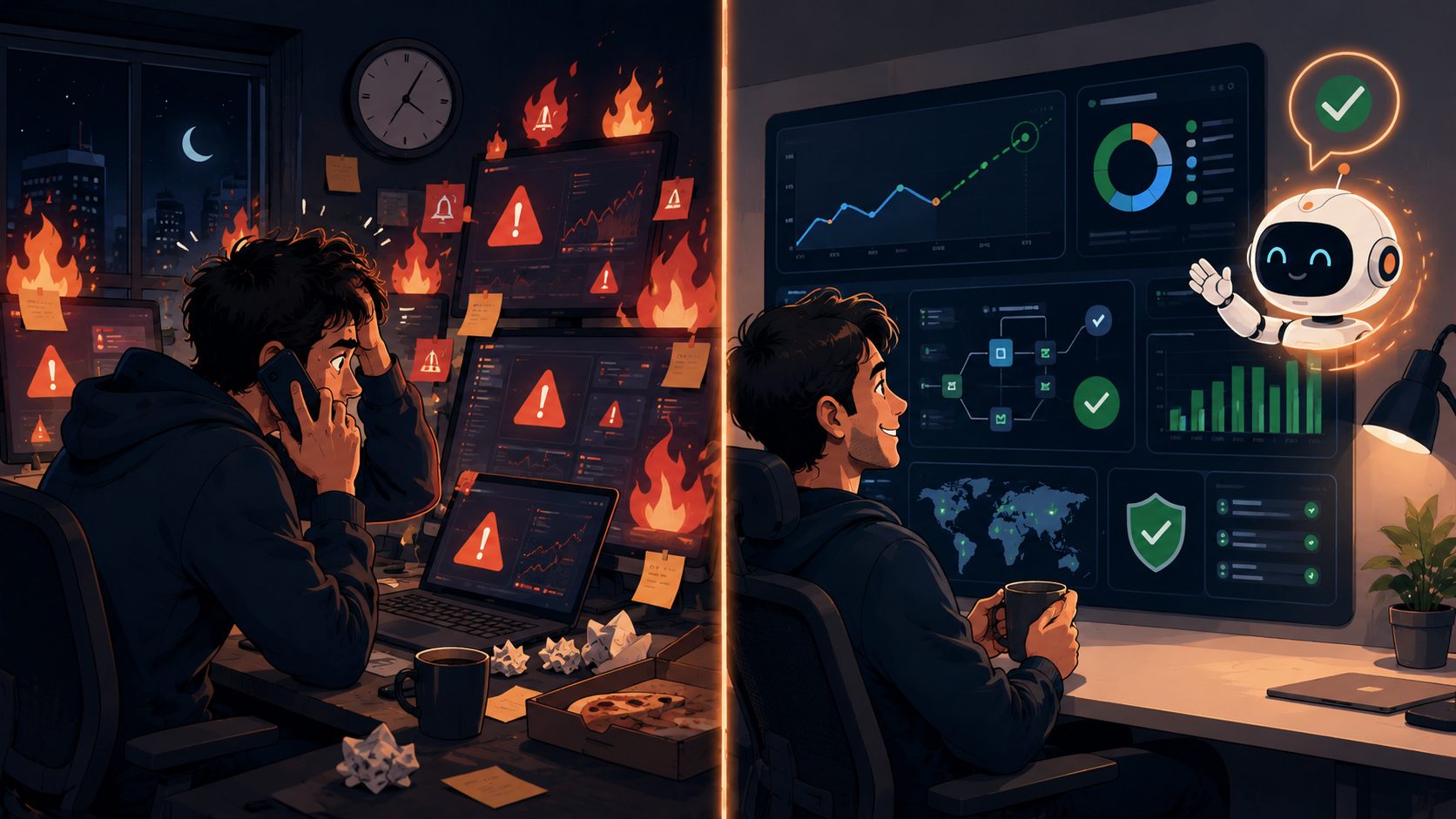
The best IT teams used to be great at putting out fires. Now they are great at making sure the fire never starts.
That said, "Have you tried turning it off and on again?" still works 80% of the time. Some classics never die.
What the next 5 to 10 years really look like
Nobody has a crystal ball. I won't pretend I do. But the direction of travel is pretty clear, and if you squint, you can already see it forming today. Here is my honest read on the future of IT careers 2030 and beyond.
Everyone becomes a little bit of an engineer
The line between "tech people" and "everyone else" is getting blurry. Marketers spin up their own dashboards. Support teams build small tools to answer tickets faster. Ops folks wire up automations without filing a single ticket.
With AI agents helping, you don't need to memorize syntax to make something useful. You just need to know what you want. That alone changes who gets to build.
AI is a teammate, not a boss
The scary headlines make it sound like AI will run the show. In real teams, it's the other way around. AI agents do big chunks of the work, like writing first drafts of code, sorting data, or testing edge cases.
But humans still set the goals, review the output, and own the result. The AI doesn't get fired if the launch goes wrong. You do. So you stay in the driver's seat, even when the AI is doing the typing.
Smaller teams, much bigger output
This is the part that excites me most about the future of software developers. A focused 3-person team in 2030 will ship what a 15-person team shipped in 2020. Same quality, sometimes better, in a fraction of the time.
That doesn't mean fewer jobs by default. It means small companies can do big things, and good builders become a lot more valuable per head.
Brand-new jobs nobody has a title for yet
Ten years ago, "prompt engineer" would have sounded like a joke. Now look around. New roles are showing up faster than HR can name them.
Think AI workflow designer, prompt and agent ops, AI quality reviewer, and the friendly "AI wrangler" who keeps a fleet of agents pointed in the right direction. Half the jobs of 2032 probably don't have a title today.
The human skills become the rare, expensive ones
Here's the twist. When AI can do the easy parts, the hard human parts get more valuable, not less. Clear communication. Good judgement. Taste. Knowing which question to ask in the first place.
And trust. People still want to know a real human stands behind the work. That doesn't go out of style.
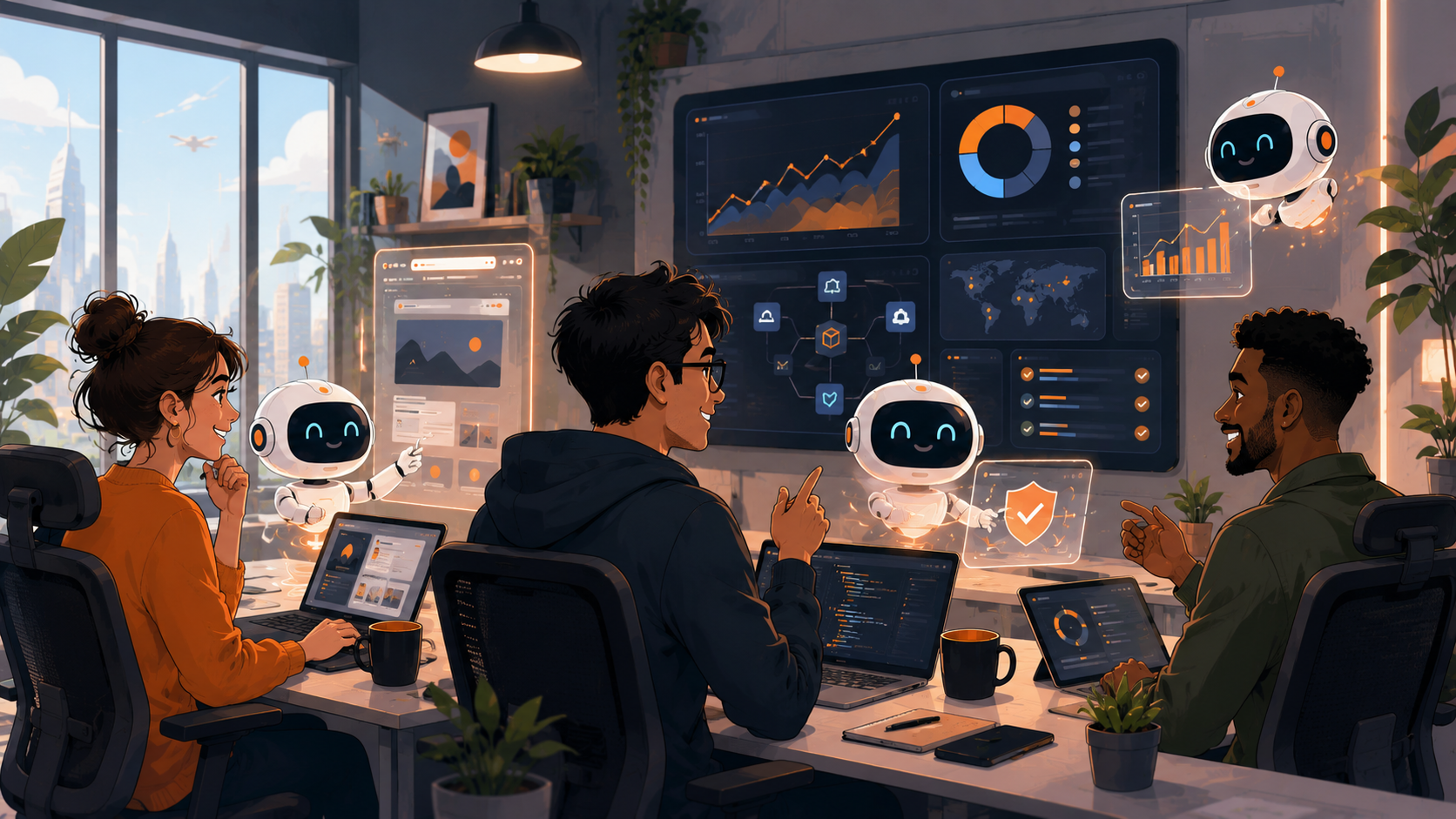
AI replaces tasks, not people who keep learning. The boring, repeatable parts of your day? Yes, those will get handed to an agent. But the people who learn to direct AI well, review its work, and turn it into real results will be more valuable, not less. Standing still is the only real risk.
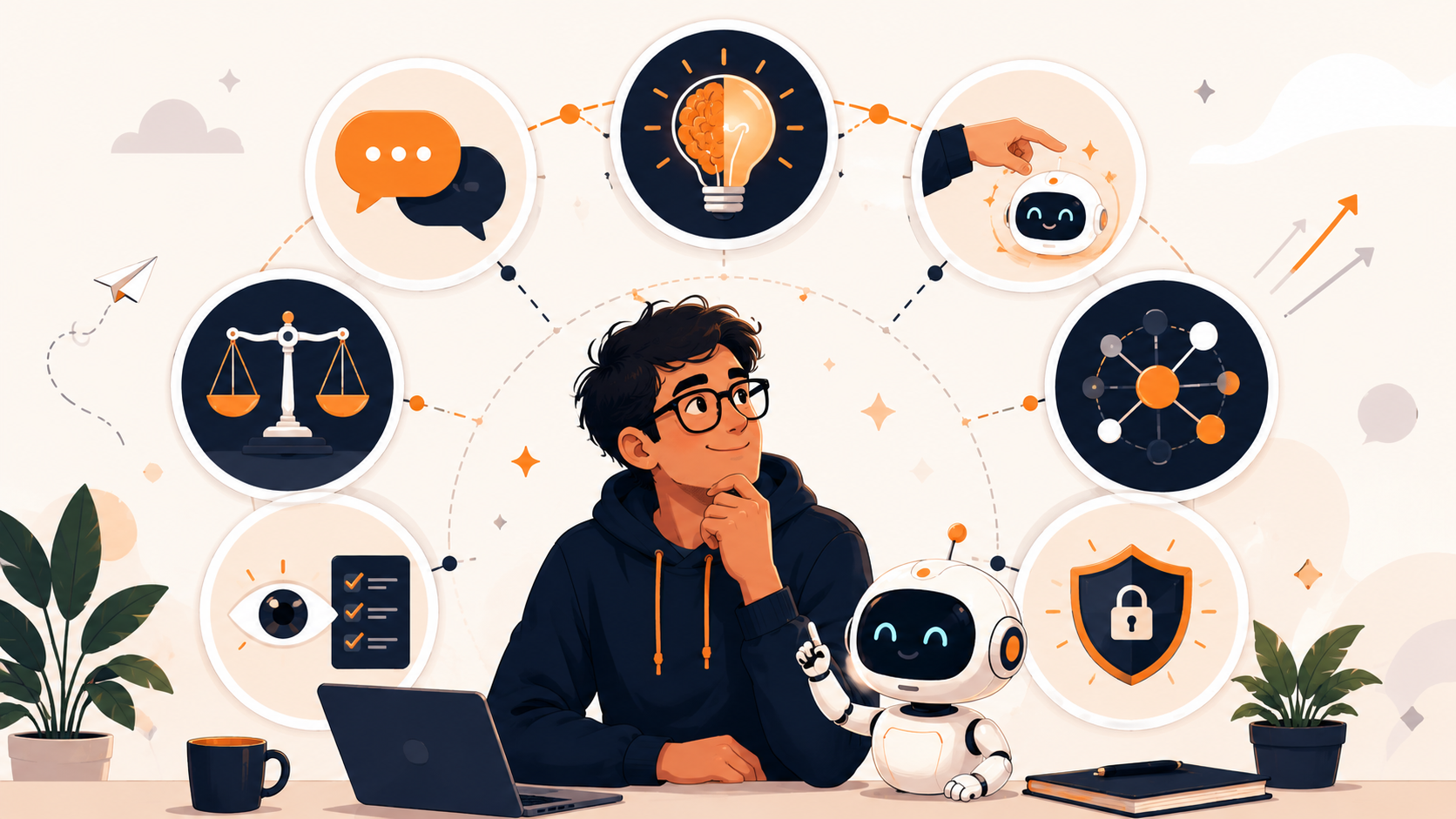
So what should you actually work on right now? If I had to pick the skills developers need to stay ahead, I'd start with these:
- Clear writing, so your ideas and prompts land the first time
- Systems thinking, so you see how the whole thing fits together
- Working with AI and prompting, so agents become real teammates
- Reviewing AI output, so you catch the mistakes before users do
- Understanding users, so you build what people actually need
- Security basics, so your shiny new tools don't leak data
- Communication and trust, so people want to work with you
- Staying curious, because the tools will keep changing and that's okay
A few funny survival notes for the new era
The tools are new. Some things, though, will never change. Here are a few truths every developer, designer, and IT person knows in their bones.
- The standup meeting still takes 45 minutes. It is still called a "quick sync."
- You no longer argue with Stack Overflow. Now you argue with an AI, and it says "you're absolutely right, I apologize" before doing the same thing again.
- Naming variables is still the hardest problem in computer science. The AI suggested
data2_final_v3. - "It works on my machine" has become "it works on my AI's machine."
- Coffee is still the real CI/CD pipeline. No coffee, no continuous anything.
- The rubber duck got a promotion. It has a coworker now, and the coworker talks back.
- Your browser still has 47 tabs open. They are just AI tabs now.
- You will happily spend 10 minutes automating something to save 10 seconds of typing. And you will feel like a genius.
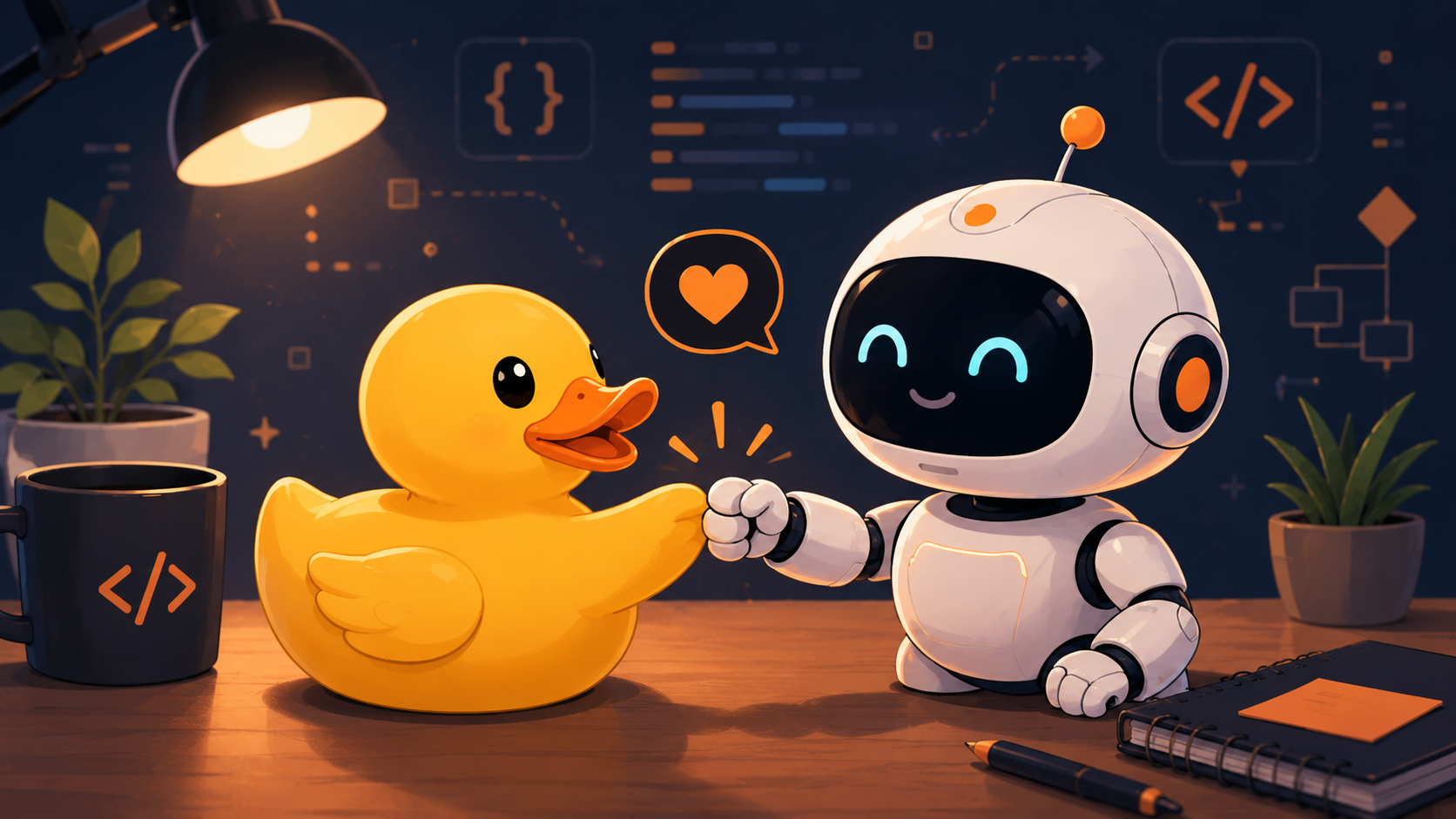
The tools changed, but the job got more human, not less. Less typing, more thinking. Less grunt work, more real problem-solving. The people who stay curious, ask good questions, and learn to direct AI well are going to love the next 10 years.
Building or upgrading a Magento 2 or Hyvä store and want a developer who already works this new way, fast, AI-assisted, but careful with quality? Let's talk.
Work with meFrequently asked questions
Will AI replace software developers?
No, but it will change the job. AI is great at writing small pieces of code fast, yet it still needs a person to decide what to build, check the work, and fix the parts it gets wrong. Think of it as a very fast junior helper, not a replacement. Developers who use AI well will be far more valuable than those who ignore it.
What skills should developers learn for the next 5 years?
Focus on the things AI cannot do alone: clear thinking, system design, and knowing why a piece of software should exist. Get good at reading and reviewing code, not just writing it. Learn how to prompt and direct AI tools clearly. And keep your fundamentals strong, because you still need to spot when the AI is confidently wrong.
Is design still a good career in the AI era?
Yes, and arguably a better one. AI can make a hundred quick mockups, but it cannot truly understand your users, your brand, or the feeling you want a product to give. Designers who guide AI tools spend less time pushing pixels and more time on real strategy and user experience. The taste, judgment, and empathy are still 100% human.
What will IT support and DevOps jobs look like in 2030?
More automated and more strategic. Routine tasks like patching, monitoring, and simple tickets will largely run themselves with AI watching the systems. The human role shifts to designing reliable systems, handling the weird edge cases, and making smart decisions when something breaks in a new way. Fewer late-night fire drills, more thoughtful planning.
Should I still learn to code in 2026?
Absolutely. Learning to code teaches you how software actually works, and that understanding is exactly what lets you use AI tools well. You do not need to memorize every detail, but you do need to read code, judge if it is good, and fix it when it breaks. Coding is becoming less about typing and more about thinking, and that skill is not going away.
Are coding bootcamps and computer science degrees still worth it?
They can be, if you treat them as a starting point and not a finish line. A degree gives you deep fundamentals, and a good bootcamp gives you fast, practical skills, both still useful. The key is to learn how to work alongside AI tools while you study, not pretend they do not exist. The market rewards people who can build real things and keep learning, no matter how they got started.
Related posts
-
Generative Engine Optimization (GEO) for Magento: Get Cited by AI Search
GEO is how you get Magento product, category, and brand pages cited inside ChatGPT, Perplexity, and Google AI Overviews. A concrete, honest developer playbook.
-
Google AI Mode Is Here (May 2026): The SEO Playbook You Need to Rewrite, Now
AI Overviews now show up on 48% of Google queries, and 93% of AI Mode sessions end without a single click off the page. The bar moved from 'rank a link' to 'be cited inside the answer.' Here is the May-2026 playbook: the six ranking factors that actually drive citations, the llms.txt + JSON-LD stack to deploy this week, the bot-allow rules every site needs, and the one Magento-specific pattern that turns AI Mode from a traffic loss into a brand-mention pipeline.
-
Adobe Commerce vs Magento Open Source in 2026
Adobe Commerce starts at ~$22,000/year and scales with your GMV; Magento Open Source is free. This is the feature-by-feature breakdown: B2B, Live Search, Page Builder, staging, RMAs, plus a plain-English verdict on when the paid license pays for itself and when Mage-OS is the smarter third path.