Skip to content
5.0 Upwork, 100+ reviews Adobe Certified since 2021 New: become your own Magento developer Learn more →
Industry · Wedding + bridal + occasion

Magento for wedding and bridal stores: made-to-order dresses, bridesmaid groups and deposits

I build Magento for wedding and bridal stores, and most of the work sits in the order flow, not the theme. A gown is made to the bride’s measurements and can take months, so the store has to know her wedding date. Several bridesmaids want the same dress in different sizes, ideally cut from the same dye lot. Invitations need a proof she approves before printing, and many orders start with a deposit. Most of this is not in a default Magento install, so below I explain what I add for each one.

  • Measurements and wedding date saved on the order, with the ready date shown before checkout
  • Bridesmaid orders linked as a group, so production can cut and dye them together
  • Gift registry: built into Adobe Commerce, an extension on Magento Open Source
Adobe Certified Magento developer since 2021 Freelance: you talk to the person writing the code
Why bridal stores are different

Four things that make a bridal store harder than a normal shop

A t-shirt shop never asks for a hollow to hem measurement or a wedding date. A bridal store needs both on the first order, so I plan for these before the catalog is built.

  • To order The dress is made after she buys

    Most bridal gowns are cut and sewn after the order comes in, from the bride’s own measurements, and that can take months. So the store has to ask for bust, waist, hips and hollow to hem, and it has to say when the dress will be ready. Magento can collect the measurements, but it has no idea of a production time until you give it one.

  • Event date Everything runs back from one date

    A bride does not care much about the ship date. She cares whether the dress arrives in time for the last fitting before the wedding. If the store knows the date at checkout, it can warn her before she pays, instead of support writing an awkward email a week later.

  • Groups Bridesmaids order together

    Several people want the same dress in the same colour, in different sizes, often from different cities and on different days. Dresses dyed in separate batches can come out a shade apart, so the maker wants to produce the group together. Magento sees each checkout as a separate order, so the link between them has to be added.

  • Deposit Part now, the rest later

    Custom dresses and wedding stationery are often paid as a deposit up front and a balance before delivery. Magento Open Source takes one payment per order and has no deposit feature, and a card authorization will not stay open for months. This needs an extension or a small module, chosen before checkout is built.

What I build

How I set up Magento for a wedding and bridal store

These are the six areas I usually work on for a bridal shop. Each card says what Magento handles by itself and what I add, so you can see the size of the job before we talk.

  • Measurements and lead times on the product page

    I add the measurement fields as custom options on the dress, with a short how-to-measure guide next to them, so the numbers land on the order item and print on the production sheet. Each style gets a production time attribute in weeks. The product page shows the expected ready date, and a small module compares it with the wedding date the customer enters, then warns her or stops checkout when the timing cannot work. Rush production can be a paid option.

  • Fabric swatches and samples

    Brides order swatches before they commit to a colour. I set each swatch up as its own simple product at a low price, linked from the dress page, and keep the Maximum Qty Allowed in Shopping Cart setting low so nobody orders forty. Swatches fit in an envelope, so they get their own cheap shipping rate. If you want the swatch cost to come off the dress later, a cart price rule with a coupon in the swatch email handles that.

  • Bridesmaid group orders

    Magento has no shared cart, so I build a light group feature. The bride creates a group for one style and colour and gets a link. Each bridesmaid opens it, picks her size, enters her measurements and pays for her own dress. Every order carries the group code, so production can cut and dye the group together, and the admin shows who has not ordered yet. If one person pays for everyone, Magento’s built-in ship to multiple addresses checkout can send each dress to a different home, as long as your payment method supports it.

  • Gift registry

    A gift registry comes with Adobe Commerce, but not with Magento Open Source. On Open Source I either add a registry extension or, for a smaller shop, start with the native wish list, which a couple can already share by email. Many couples keep their main list on a big registry site, so I also make sure your product pages have clean titles, prices and images that those sites can pick up when a guest adds them.

  • Personalised items with proof approval

    Invitations, engraved rings and monogrammed gifts use custom options too: text fields for names and dates, a drop-down for the font, and the file option when the customer uploads her own artwork. Each option can carry its own price. For stationery I add an order status such as “Awaiting proof” (Magento lets you create your own statuses), email the proof, and give the customer an approve button in her account, so nothing goes to print until she says yes.

  • Deposits, fittings and returns

    For deposits and balance payments I pick an extension or write a small module, depending on your payment provider. Fitting appointments can run through a booking extension, or through the calendar tool you already use with the order number passed along. Made-to-order items usually cannot be returned, so I add a “made to order, final sale” note on the product page and in the cart, plus Magento’s built-in terms and conditions checkbox at checkout. In the EU, goods made to the buyer’s specifications are an exception to the 14-day right of withdrawal.

  • Questions before you start?Read the answers →

Your quote

Get a fixed quote for your project

Send your store URL and describe what you want to change. We can review the requirements and agree a written scope, quote and timeline before work starts.

  • Free first call
  • Written scope, price and timeline
  • You approve every change
The build process

Five steps from audit to optimised wedding store

Audit → plan → build → deploy → stabilise. Tuned for wedding’s timeline pressure: every order is a real wedding date and a missed lead-time means a refund and a one-star review. Optional ongoing retainer through the next four seasons.

  1. 01

    Audit

    Catalog review (off-the-rack vs made-to-measure split, lead-time disclosure, sizing chart quality), registry partnerships audit (Zola, The Knot, Honeyfund, which are integrated, which aren’t), group-order flow gap analysis (do bridesmaids have a path today, or are they doing it via email?), personalization configurator audit, multi-event Klaviyo journey state. 1 week.

    Baseline + gaps
  2. 02

    Plan

    Catalog architecture (configurable products vs custom-options for made-to-measure), made-to-measure workflow spec (which measurements, virtual-tailor consult cadence, cart-block rules), registry API priority (Zola first if you’re US-led, The Knot if you’re multi-vertical), group-order flow + Klaviyo journey, vendor-marketplace scope if relevant. Written spec + Gantt.

    Locked scope
  3. 03

    Build

    Catalog + made-to-measure flow (PDP, cart, account) + 1+ registry integration + group-order module + personalization configurator + Klaviyo multi-event journey + Hyvä storefront + (optional) vendor marketplace. Built in 6-14 weeks depending on scope. Test fixtures for a mock wedding party of 8 bridesmaids placing a group order with mixed sizes.

    Build + UAT
  4. 04

    Deploy

    Blue-green deploy with a smoke test of the measurement flow, mock group-order placement (8 bridesmaids, 3 sizes, single ship-to), registry-webhook end-to-end (test gift on Zola sandbox → order in Magento), Klaviyo journey trigger test. Pre-flight checklist: lead-time math correct? Cart-block triggers correctly? Bridesmaid invite link valid? War-room for first live group order.

    Live + verified
  5. 05

    Stabilise

    Quarterly registry partner refresh (their APIs change every 6-9 months), monthly group-order completion-rate tracker (target: 75%+ bridesmaids complete within 14 days), made-to-measure return-rate by SKU + measurement-band, Klaviyo journey open + click rates by event stage. Iterate on size charts, virtual-tailor consult conversion, personalization upsell placement. Optional ongoing retainer ($1.5k to $5k/mo).

    Optimised + iterating
Client reviews

What clients say about working with me

Public reviews on Upwork. Same person, same rate card, same playbook for every brand.

Magento work and feedback View Upwork profile

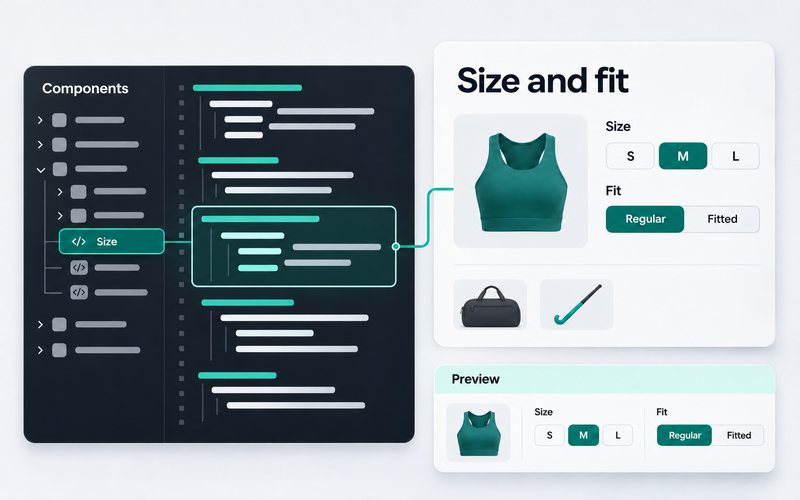
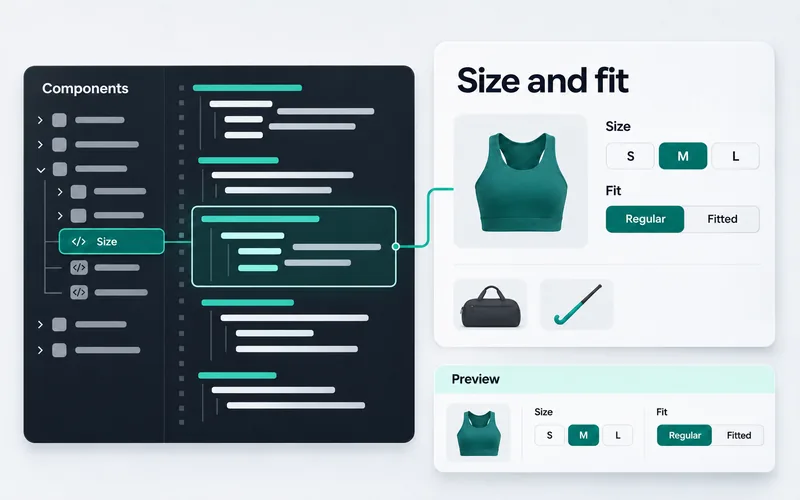
  • Illustration of Magento 2 development work for a sports footwear and hockey shop
    Sports footwear and hockey shop, Netherlands
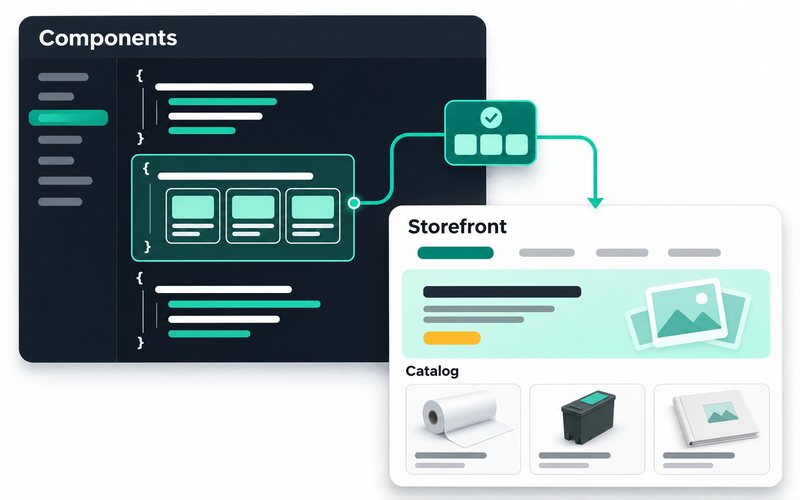
  • Illustration of Magento 2 development work for a photo printing supplies wholesaler
    Photo printing supplies wholesaler, Netherlands
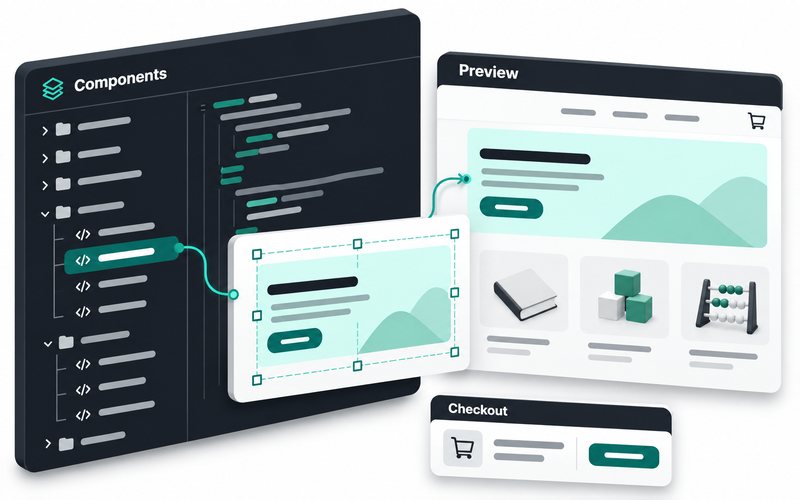
  • Illustration of Magento 2 development work for an educational toys and books shop
    Educational toys and books shop
  • Kishan has done an excellent job in a timely manner. He is very knowledgeable, has a very positive attitude, easy to communicate.

    Z. K.Magento 2 client
  • He is technically strong, approaches problems thoughtfully, and focuses on stable, long-term solutions.

    E. H.Magento 2 client
  • Kishan was a pleasure to work with! He is highly skilled, professional, and delivered outstanding results on time.

    M.Magento 2 client
  • Working with wedding and bridal stores in
  • United States
  • United Kingdom
  • Canada
  • Australia
  • Germany
  • France
  • Netherlands
  • India
Read all reviews
FAQ

Twelve questions wedding + bridal ecom leaders actually ask

Magento vs Shopify Plus vs BigCommerce vs BHLDN/Anthropologie tech, which fits a wedding + bridal DTC brand?

Honest cut, wedding-specific:

Shopify Plus wins if: catalog under 1,500 SKUs, off-the-rack only (no made-to-measure complexity), one registry integration is enough, ops team is 1-2 people. Birdy Grey runs on Shopify Plus and proves you can do bridesmaid groups well there with the right apps (TryNow, Klaviyo, Recharge).

BigCommerce wins if: you’re B2B-heavy (wholesale to boutique bridal shops) and want headless without paying Adobe Commerce list price. BigCommerce B2B Edition is competitive at $4k+/mo.

Magento wins if: made-to-measure flow with cart-block-on-lead-time, 3+ registry integrations, group/bridesmaid orders with mixed sizes, personalization configurator with surcharge + lead-time math, multi-event Klaviyo journey, local-vendor marketplace adjacency, multi-region sizing (US / EU / IN sari / ME abaya), or B2B + DTC on same store. Most wedding brands move to Magento around $1.5M GMV when Shopify variant ceilings + app-stack costs start hurting.

BHLDN / Anthropologie / David’s Bridal: mostly run on bespoke / Salesforce Commerce Cloud / Hybris stacks, not realistic for brands under $50M. Magento + Hyvä gives you ~85% of their capability at ~5% of the cost.

Made-to-measure flow, how do you handle 4-16wk lead-times in Magento?

The classic wedding bug: bride orders a made-to-measure gown 3 weeks before her wedding, vendor can’t ship in time, chargeback + one-star review + social-media drama. Three pieces wired together prevent this:

  • Body-measurement guide at PDP, bust / waist / hip / hollow-to-hem / inseam captured as Magento custom options on configurable products. Optional virtual tailor consult booked via embedded Calendly with the SKU pre-filled. Measurement history saved to customer account for repeat bridesmaid orders.
  • Per-SKU lead-time attribute, 4, 6, 8, 12, or 16 weeks depending on dress complexity + fabric availability. Displayed prominently on PDP (“Ships in 12 weeks, order by July 8 for an October wedding”), in cart, and in order confirmation. Re-computed if personalization options bump the lead-time.
  • Hard cart-block, a custom checkout field captures the customer’s wedding date. If the date is inside the lead-time window for any item in cart, checkout is blocked with a clear message + offer of rush-order upgrade (if available) or alternative off-the-rack styles. Prevents 90%+ of disaster orders.

BHLDN, Anthropologie BHLDN, and David’s Bridal all use a variant of this. Pattern is reusable across veils, custom invitations, and personalized gifts.

Wedding registry integration, how do Zola, The Knot, Honeyfund, Amazon Wedding sync with Magento?

Three integration patterns depending on the partner’s API maturity:

  • Zola, cleanest API of the three. Magento product feed pushed via their Partner API; couples add your products to their Zola registry; gift purchases fire a webhook back to Magento creating an order with a registry-tag attribute + ship-to-couple-address. Couple gets a thank-you note; you get the order. Integration takes ~3 weeks.
  • The Knot, feed-based + partner-managed. Push your catalog to their merchant team; they ingest weekly; gift purchases route through their checkout and you get an order export nightly. Slower turnaround but bigger audience (40M+ users).
  • Honeyfund, cash-fund-first registry. Product integration is lighter (mostly for experience gifts and honeymoon contributions). Magento webhook handles the funding transfer.
  • Amazon Wedding Registry, you need to be an Amazon seller. Same product feed, but Amazon owns the customer relationship; you fulfill against their orders. Worth doing for accessory + favor brands.
  • MyRegistry, universal-registry aggregator. They scrape any URL into a registry, so couples can add your products without you doing anything. Free traffic.

Registry-driven orders convert at 2.4x the rate of search traffic in the data I see, and AOV is ~25% higher. For accessory + decor + favor brands the registry integration pays back inside 90 days. The piece most teams miss: the thank-you note automation for the gift-giver, bake it into Klaviyo and it lifts repeat purchase rates 12-18%.

Group + bridesmaid orders, single bride, multiple bridesmaids, mixed sizes, single ship-to. How?

Birdy Grey shipped the modern model and every modern bridesmaid-dress brand has copied it. Native Magento multi-shipping won’t do it, needs a custom group-order module on top of standard checkout. The flow:

  • Bride starts a group order on the PDP (“Order this dress for my bridesmaids”). Gets a unique shareable invite link tied to a group-order ID.
  • Sends link to 4-12 bridesmaids via SMS/email/group chat. Each bridesmaid lands on a curated page showing the same dress and color the bride picked, but lets her choose her own size.
  • Each bridesmaid enters her measurements + picks her size variant + (optionally) personalization. Measurements saved to her customer account for future repeat bridesmaid orders.
  • Single ship-to address (bride’s) by default for simultaneous arrival; or per-bridesmaid addresses if preferred.
  • Payment, bride pays in full, splits via Klarna/Afterpay, or each bridesmaid pays her own line.
  • Klaviyo journey chases bridesmaids who haven’t completed sizing at 3 / 7 / 14 days. Target completion rate: 75%+ within 14 days.

Pricing is a fixed written quote for your scope. Send the details on WhatsApp and I reply within one working day. Pays back inside 6 months for any bridesmaid-dress brand at $500k+ GMV because AOV jumps 4-10x per order vs single-purchase.

Multi-event Klaviyo journey, engagement → shower → rehearsal → ceremony. How do you build it?

A wedding is not one transaction, it’s 4-8 transactions over 12-18 months. Engagement (announcement card → save-the-date) → bridal shower (gift, decor, favors) → bachelorette (matching tees, sash) → rehearsal dinner (dress, decor) → ceremony (gown, jewellery, veil) → honeymoon (registry cash funds).

The pattern:

  • Capture wedding-date at first transaction, either via a hidden checkout field, a post-purchase popup, or a registry-sync (Zola/Knot already have the date). Saved to Magento customer attribute and synced to Klaviyo profile.
  • Klaviyo flow with T-minus-N triggers, trigger next-event email at the right interval relative to wedding date. T-12mo: engagement / save-the-date. T-6mo: shower planning. T-3mo: dress + bridesmaids. T-1mo: rehearsal + ceremony. T-0: honeymoon. T+3mo: anniversary / repeat customer.
  • Segment by event-stage, different product recommendations per stage. Recommend favors during shower-planning window, not bouquet alternatives.
  • Predictive LTV scoring, first-transaction signals (registry vs single, AOV, category mix) predict cohort LTV. High-LTV brides get the white-glove treatment (concierge calls, exclusive samples).

Average wedding-cohort LTV in the data I see runs $1,800, $4,200 across the cycle vs $180 for a single-transaction shopper. The Klaviyo journey is the single highest-ROI thing a wedding + bridal brand can build. Contact me on WhatsApp for a quote. I reply within one working day with scope, price and timeline.

Personalization at PDP, monogram, custom color, embroidery. Surcharge + lead-time math, how?

Magento custom-options + configurable products handle this cleanly. Three configurator pieces:

  • Monogram, 3-letter text input with a font picker (4-6 fonts) and thread-color picker (Pantone-matched). $X surcharge (typically $15, $45). Lead-time bump (+1-2 weeks).
  • Custom color, Pantone-matched dye lot for solid-color items (bridesmaid dresses, robes, decor). $X surcharge ($30, $150). Lead-time bump (+4-6 weeks because dyeing is batch-scheduled).
  • Embroidery, position (left chest, back, sleeve), text, font, thread color. $X surcharge ($20, $80 depending on stitch count). Lead-time bump (+1-3 weeks).

The math UX: every option update re-computes the disclosed ship-by date on PDP in real time. “Order today, ships by July 8” updates to “Order today, ships by July 22” when monogram is added. Prevents lead-time surprise at checkout.

Production team gets a clean order-line export with monogram preview PDF (rendered via headless Puppeteer or ImageMagick), embroidery position diagram, and color sample reference. No back-and-forth emails clarifying spec.

Personalization typically lifts AOV 18-34% on PDPs where it’s offered. I quote every job in writing before any work starts. Message me on WhatsApp with a short brief and you get scope, price and timeline within one working day. Pays back inside 90 days for any wedding gift / favor / monogrammed-accessory brand.

Local-vendor marketplace, florist, photographer, venue listings + commission. Feasible on Magento?

Yes, and it’s a 12-20% revenue line on top of product sales for brands with audience but inventory-limited catalogs (e.g. a bridal jewellery brand whose customers also need florists and photographers).

Three implementation paths:

  • Webkul Marketplace, the dominant Magento marketplace extension. Vendors get profiles, lead-form submissions, commission tracking, and a vendor dashboard. ~$700 one-time. Suitable for <1,000 vendors.
  • CedCommerce Marketplace, similar feature set, better support, ~$500. Both work fine.
  • Custom build, if you want vendor onboarding tied to your existing Magento customer attributes (e.g. only verified businesses can list), and a commission model more complex than flat-percent (e.g. tiered by booking value). I quote every job in writing before any work starts. Message me on WhatsApp with a short brief and you get scope, price and timeline within one working day.

The model that works: couple submits inquiry via a single form (“Find me a florist near 90210 for a 150-guest June wedding”) → routed to top-3 matched vendors by zip + capacity + style match → vendor pays $X commission (typically $50, $200) on booked event, validated via screenshot upload or DocuSign attachment.

The Knot, Zola, and WeddingWire all run a version of this at scale. A Magento instance one-tenth their size can capture the same revenue from a regional audience. Build budget: $15k, $30k. Break-even: 12-18 months at moderate vendor volume.

Returns + alterations, most made-to-measure dresses are non-returnable. How do you handle policy + edge cases?

Industry standard: made-to-measure gowns are non-returnable (customer signs off on measurements; dress is cut to spec; can’t restock). Off-the-rack is returnable per standard policy (typically 14-30 days, unworn, tags attached, no alterations).

The Magento policy enforcement:

  • Per-SKU return-eligibility flag, product attribute set to non-returnable for made-to-measure items. Displayed on PDP, in cart, in order confirmation. Customer ticks “I understand this is non-returnable” checkbox before checkout.
  • RMA module rejects ineligible items, if customer tries to start a return on a non-returnable item, the form blocks them with the original policy disclosure shown. Routes them to alterations instead.
  • Alterations workflow, for sizing-off issues on made-to-measure items, route to local alterations (partner with a network) or to in-house remake at cost. Magento order-line gets an “alterations claim” tag; customer support pre-approves; alterations vendor invoices the brand.
  • Edge cases: damaged-in-transit (always returnable; carrier claim), wrong size shipped (always returnable + refund + apology gift), bride changed her mind 2 weeks before wedding (case-by-case discretion; not policy).

The legal piece: returns policy must be conspicuously linked from PDP + cart + checkout per FTC + EU CRD + UK Consumer Rights Act. Pre-checkout acknowledgement checkbox provides defensible audit trail in chargeback disputes. Saves ~80% of policy-related chargeback losses in the data I see.

International shipping + customs declarations for gowns, what changes?

Wedding gowns are high-value low-volume international shipments. Specific considerations:

  • HS codes, wedding dresses typically classify under HS 6204.43 (women’s dresses, synthetic) or 6204.49 (other). Bridal accessories under various 7113 (jewellery) or 6213 (handkerchiefs/scarves) codes. Wrong HS code = customs delay + duty miscalculation = bride doesn’t get the dress.
  • FTC textile content labelling, required for US-bound apparel. Fabric content + country of origin + RN number must be on a permanent label inside the garment. Magento product attribute captures this for the commercial invoice.
  • Insurance, declared-value insurance is essential. $3,000+ gown lost in transit without insurance = $3,000+ loss + bride disaster. Magento checkout adds insurance cost (1-3% of declared value) automatically for international wedding-dress orders.
  • DDP (Delivered Duty Paid) vs DDU, DDP is mandatory for wedding gowns. Bride should never be surprised with a customs invoice. Magento + Avalara CrossBorder (or Zonos) computes landed cost at checkout including duty + VAT + brokerage.
  • Lead-time math includes customs, add 5-10 days to disclosed ship-by-date for international destinations. EU customers ordering from US brands need to know it’s 16 weeks production + 10 days customs.
  • Restricted destinations, some countries (e.g. certain ME states for revealing dresses, certain currency-restricted economies) require extra paperwork. Maintain a country-allowlist in Magento + cart-block + clear message.

Pattern works for Birdy Grey shipping bridesmaid dresses internationally, for boutique designers shipping single gowns. The customs piece is what separates a polished brand from one that gets dragged on Reddit.

Multi-region sizing, US wedding norms vs EU vs India (sari) vs ME (abaya). How do you architect?

Sizing systems are not interchangeable across wedding markets:

  • US, bridal sizing typically runs 2 sizes smaller than ready-to-wear (a RTW 8 is a bridal 10/12). Standard sizes 0-30W. White dress norm.
  • EU, metric sizing (34-58) with country variations (UK 6-30 maps differently than DE/FR/IT). White or ivory dominant; some pastel + colored bridal markets (Spain, Italy).
  • India, sari, lehenga, sherwani. Sizing by measurements (blouse + waist + length); no off-the-rack standard sizes. Color: red, pink, gold dominant (white is traditionally mourning color). Multi-event norm (mehndi → sangeet → ceremony → reception, each with different outfit).
  • Middle East, abaya, kaftan, kurta. Sizing by length + bust + sleeve. Modesty requirements (full coverage, certain fabric weights). Modesty preview required at PDP. Some destinations (KSA, UAE) require modesty-compliant model imagery.

The Magento architecture: Multi-Source Inventory (MSI) + region-specific store views + region-specific size charts + region-specific PDP model imagery. Same SKU pool where products overlap; region-specific products where they don’t (e.g. lehenga only shows on the IN store view).

Pricing + currency: separate store views per region with appropriate currency (USD, EUR, GBP, INR, AED) and tax treatment (VAT-included in EU, GST-included in IN, tax-excluded in US). Klaviyo segments by store-view-of-origin so the multi-event journey copy adapts to local wedding norms.

Most brands ship the US store first, add EU when GMV hits $1.5M+, add IN/ME at $5M+ when the regional customer base justifies. Don’t over-architect on day 1.

Cost + timeline + your credentials, what does building a wedding + bridal Magento store actually cost?

Realistic ranges for a wedding + bridal brand at $500k, $5M GMV:

  • Audit: 5-day fixed-fee. Catalog review, made-to-measure flow gap analysis, registry integration audit, group-order flow review, personalization audit, multi-event Klaviyo state. Written PDF + 30-min walk-through call.
  • Build sprint: 6-week fixed-fee. Catalog + Hyvä storefront + made-to-measure flow + 1 registry integration + group-order module + personalization + Klaviyo journey scaffold + UAT + go-live + 30 days post-launch support.
  • Custom enterprise (quoted): Multi-week engagement. Full multi-event journey, all 3 registries integrated + Amazon Wedding, local-vendor marketplace, multi-region sizing, B2B layer for wholesale to boutiques, PIM (Akeneo / Pimcore) for catalog of truth. Typically $25k, $80k all-in.
  • Hosting: $400, $1,500/mo on Cloudways / dedicated. Wedding traffic spikes around engagement season (Nov, Feb) and wedding-show season (Jan, Mar). Over-provision for those 4 months.
  • Ongoing: retainer for through-season ops (registry-API refreshes, Klaviyo journey iteration, vendor-marketplace operations).

My credentials: Adobe-Certified Magento + Hyvä developer. 7+ years of wedding + event DTC builds shipped, bridesmaid-dress brands, custom-invitation studios, bridal-jewellery makers, favor + decor brands, and one full bridal-boutique migration. References on request; reviews public on Upwork. I quote every job in writing before any work starts. Message me on WhatsApp with a short brief and you get scope, price and timeline within one working day.

Edge cases, what if I’m a single-designer boutique? What if I’m a full-range bridal retailer?

Two ends of the wedding-DTC spectrum, two different Magento builds:

Single-designer boutique (30-200 SKUs, $200k, $2M GMV):

  • Keep it simple. Skip the full vendor marketplace, skip multi-region day-1.
  • Focus: gorgeous PDPs (lookbook + video + AR if eyewear/headpieces), made-to-measure flow with cart-block on lead-time, one registry integration (pick Zola if US-focused or Honeyfund if cash-funds matter to your audience), Klaviyo multi-event journey scaffold.
  • Personalization (monogram + custom-color) lifts AOV ~25%, worth doing even at small scale.
  • Build budget: sprint + retainer through the first season.
  • Hyvä mandatory, mobile traffic is 75%+ of bridal organic, and a slow site at this scale loses you the customer to BHLDN search ads.

Full-range bridal retailer (2,000-25,000 SKUs, $5M, $50M+ GMV):

  • All 3 registries + Amazon Wedding integrated. Group-order module mandatory if you carry bridesmaid lines.
  • Multi-region sizing if you ship internationally. Multi-source inventory (MSI) for stock-by-warehouse.
  • B2B layer for wholesale to boutique bridal stores (15-30% of revenue for most full-range retailers).
  • PIM (Akeneo / Pimcore) as the catalog of truth if you carry >5 designers / brands. Magento pulls from PIM; same feed pushes to registries, marketplaces, and wholesale channels.
  • Local-vendor marketplace if you have audience that exceeds your inventory (e.g. you’re known for bridal jewellery but couples ask you for photographer referrals).
  • Build budget: $25k, $80k all-in (custom enterprise scenario). 16-28 weeks. I quote every job in writing before any work starts. Message me on WhatsApp with a short brief and you get scope, price and timeline within one working day.

Either end of the spectrum, Magento + Hyvä handles it. The architecture decisions are different; the underlying platform is the same. I’ve shipped both ends and the playbook is robust.

Free wedding + bridal consultation

Book a free 30-min wedding + bridal Magento consultation

Tell me your category mix, current registry partners, and main pain. I’ll send a written platform-fit recommendation within 24 hours and include a 30-min calendar link if a call would help. No upsell.

Message me on WhatsApp

No form to fill. Send me a quick message. I reply during 10 AM to 7 PM IST, Monday to Saturday.

Helpful to mention

  • Current platform
  • Store URL (optional)
  • Annual GMV (USD)
  • Primary category
  • Compliance focus
  • Main pain / why you’re looking at Magento

These are already in the message for you. Just add your answers.

Message me on WhatsApp

Or save my number: +91 84012 70422

Built for your trade Share your store requirements Message me