Skip to content
5.0 Upwork, 100+ reviews Adobe Certified since 2021 New: become your own Magento developer Learn more →
Industry · Gaming hardware + esports gear

Magento for gaming hardware stores: launch days, pre-orders and returns

I build Magento for gaming hardware stores, and the hard days are launch days. A new graphics card or console goes live, bots hit the product page, and it is gone in minutes. Between launches it is pre-orders, parts that have to fit together, and dead units coming back with a serial number. Here is how I deal with each of those in Magento 2.

  • Quantity limits and reCAPTCHA so a launch is not won by bots
  • Socket, chipset and PSU wattage stored as attributes you can filter by
  • Serial numbers on orders, with RMA returns for warranty claims
Adobe Certified Magento developer since 2021 Freelance: you talk to the person writing the code
Why hardware stores are different

Four things that make a gaming hardware store harder to run

A store selling t-shirts never has to think about these. A store selling GPUs runs into all four by its first big launch, so I plan for them before the build starts.

  • Launch day A new GPU sells out in minutes

    When a new graphics card or console goes on sale, bots and resellers arrive at the same moment as real customers. Stock is gone fast, checkout slows down, and the people who missed out say so in public. Magento can cap quantities and add reCAPTCHA, but a fair launch also needs work in front of Magento, at the CDN and server, planned before the day.

  • Pre-orders Selling stock you do not have yet

    Announced hardware gets ordered weeks before the distributor ships it. Magento can take backorders when stock is at zero, but it has no real pre-order mode with a release date or its own order status. That needs an extension or a small module, plus clear wording so nobody expects next-day delivery.

  • Compatibility Parts have to work together

    An AM5 processor will not fit an LGA 1700 board, DDR5 will not go in a DDR4 slot, and a big GPU needs a power supply with enough wattage and the right connectors. Customers check this before they buy and send parts back when they get it wrong. The data has to live in attributes, not in the description, before the store can filter or check anything.

  • Serial no. Warranty claims need the serial

    A dead card comes back with a serial number, and you need to know it is the unit you sold before you swap it or send it to the manufacturer. Magento Open Source does not store serials per order item and has no returns module. Adobe Commerce includes Returns (RMA). On Open Source both come from an extension or a custom module.

What I build

How I set up Magento for a gaming hardware store

Six areas I work on for a hardware store. Some are settings you already have, some need code, and I say which is which.

  • Launch-day drops and bots

    Magento has the basic tools already. Maximum Qty Allowed in Shopping Cart can be set per product, and a small module can hold the limit per customer account across orders. Google reCAPTCHA is built in and can guard login, account creation and checkout. For the big drops I also work on the layer in front of Magento: a waiting room or rate limiting at the CDN, a warm page cache for the product page, and an account required to buy. No setup stops every bot, but together these make a launch a lot fairer.

  • Pre-orders and backorders

    For items the distributor has but your shelf does not, Magento backorders are enough: the order goes through and the product page says when to expect it. For hardware that is not released yet, I add a pre-order extension so the product shows a release date, the order gets its own status, and your team can see what is waiting on stock. I also check how incoming stock is allocated, so the oldest pre-orders are filled first.

  • PC builder and bundles

    A ready-built PC with a few upgrade choices works as a Magento bundle product: each slot (CPU, GPU, RAM, storage) is an option, and the price adds up as the customer picks. A true “build your own” tool, where choosing a CPU hides the boards that do not fit, needs a custom configurator that reads the compatibility attributes. I usually start with bundles. They are quicker to build, and they show whether customers use a builder at all before you pay for a bigger one.

  • Compatibility data you can filter

    Socket (AM5, LGA 1700, LGA 1851), chipset, memory type, form factor, GPU length, cooler height and PSU wattage each become a product attribute. In layered navigation a customer can pick “AM5” and see only the boards and coolers that match. Most of this data comes from the distributor or the manufacturer, so I map it on import rather than typing it by hand. Once it is there, a small module can suggest coolers and boards that fit the CPU being viewed.

  • Serial numbers, RMA and warranty

    I record the serial number against the order item when the warehouse picks it, either from your warehouse system or with a scan in the admin, and print it on the packing slip. When a unit comes back, support checks the serial against the order. Adobe Commerce has a built-in Returns module with its own statuses. On Magento Open Source I use an RMA extension and connect it to the stored serials, so dead-on-arrival swaps and manufacturer claims follow the same steps every time.

  • Distributor feeds and multi-source stock

    Component prices move every week, and distributor stock can change by the hour. I import the distributor feed (CSV, XML or API) on a schedule to update cost, price and stock, with checks so a broken feed cannot set a GPU to zero. With MSI (Multi-Source Inventory) your own warehouse and each distributor can be separate sources, so you can see what is on your shelf and what ships from a supplier, and with a small change the product page can say which.

  • Questions before you start?Read the answers →

Your quote

Get a fixed quote for your project

Send your store URL and describe what you want to change. We can review the requirements and agree a written scope, quote and timeline before work starts.

  • Free first call
  • Written scope, price and timeline
  • You approve every change
The build process

Five steps from audit to optimised gaming hardware store

Audit → plan → build → deploy → stabilise. Tuned for the hardware cycle: every Intel / AMD / Nvidia launch is a tested go-live with a war-room playbook. Quarterly refresh for new components, deprecated SKUs, and the next-gen GPU cadence.

  1. 01

    Audit

    Catalog mix review (custom PCs vs GPUs vs peripherals vs streaming gear vs networking vs console accessories), configurator depth audit (current cross-component validation rules, wattage calc accuracy), pre-order plan audit (launch-day queue, anti-scalper logic, refund policy), sponsor + esports partnership audit (existing codes, affiliate-platform tooling), Newegg / Best Buy / Amazon competitive teardown. 1 week.

    Baseline + gaps
  2. 02

    Plan

    Configurator architecture (component taxonomy, compat rule matrix, render output), pre-order queue logic (deposit %, dedup keys, queue-position UX), sponsor code system (tiered commission, gift-bundle workflow), RGB ecosystem attribute taxonomy, bundle builder discount tiers, streaming gear configurator scope. Written spec + Gantt + UX wireframes for the configurator.

    Locked scope
  3. 03

    Build

    Catalog import + PC configurator rules engine + pre-order queue module + RGB compat attribute UI + sponsor-code Refersion integration + bundle builder + streaming gear configurator + Klaviyo flows (launch notify, queue position, abandoned-build) + Hyvä storefront. Built in 8-14 weeks. Test fixtures simulate the RTX 5090 launch (8,000 concurrent users).

    Build + UAT
  4. 04

    Deploy

    Blue-green deploy with configurator smoke test (every component combination compiles to a valid build), mock RTX launch queue load test (8,000 concurrent users, 90-second sellout window, queue-position UI under load), CDN purge + payment-gateway dry-run, war-room playbook for the first GPU launch after go-live.

    Live + verified
  5. 05

    Stabilise

    Monitor configurator completion rate by component (where do customers abandon?), pre-order queue conversion, bundle AOV uplift, RGB attribute filter usage. Quarterly hardware-cycle refresh (Intel 15th-gen, AMD Ryzen 9000, Nvidia RTX 60-series cadence), new components added, deprecated components retired. Optional ongoing retainer ($1.5k to $5k/mo) through the next hardware cycle.

    Optimised + iterating
Client reviews

What clients say about working with me

Public reviews on Upwork. Same person, same rate card, same playbook for every gaming hardware retailer.

Magento work and feedback View Upwork profile

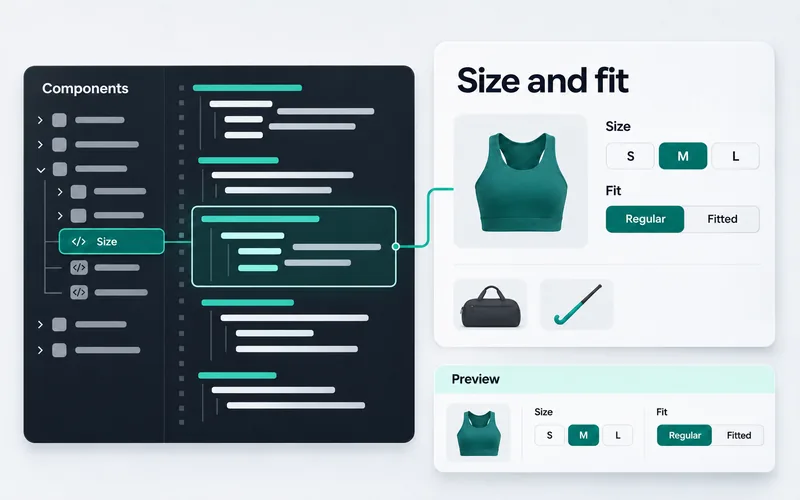
  • Illustration of Magento 2 development work for a sports footwear and hockey shop
    Sports footwear and hockey shop, Netherlands
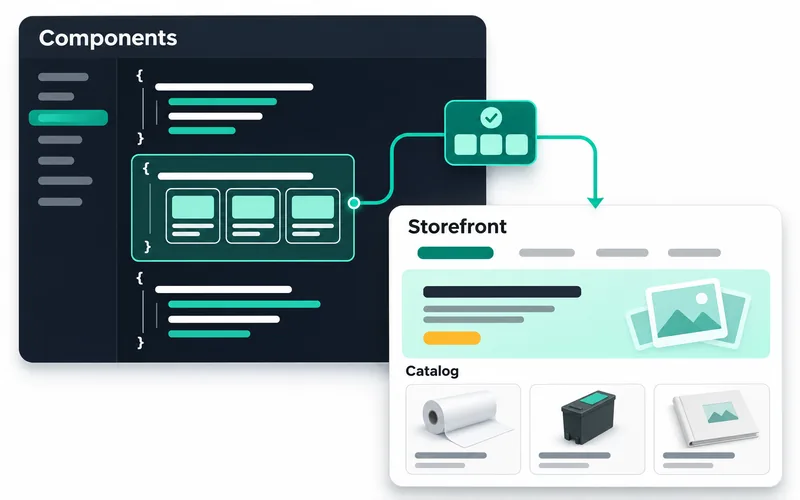
  • Illustration of Magento 2 development work for a photo printing supplies wholesaler
    Photo printing supplies wholesaler, Netherlands
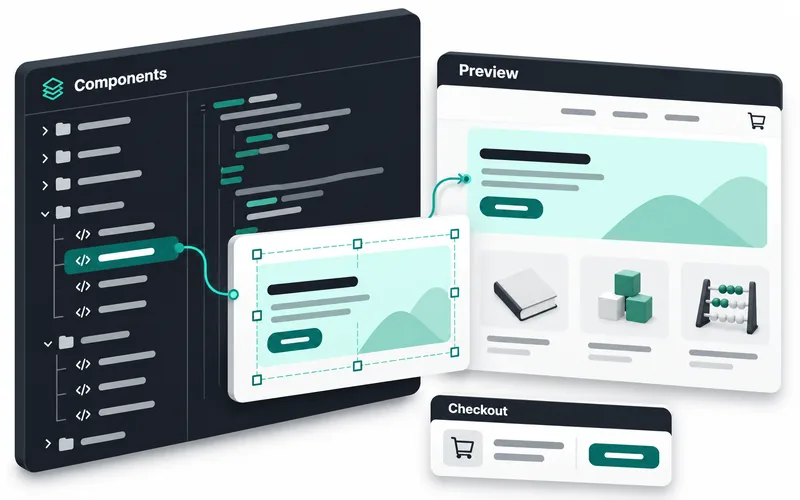
  • Illustration of Magento 2 development work for an educational toys and books shop
    Educational toys and books shop
  • Kishan has done an excellent job in a timely manner. He is very knowledgeable, has a very positive attitude, easy to communicate.

    Z. K.Magento 2 client
  • He is technically strong, approaches problems thoughtfully, and focuses on stable, long-term solutions.

    E. H.Magento 2 client
  • Kishan was a pleasure to work with! He is highly skilled, professional, and delivered outstanding results on time.

    M.Magento 2 client
  • Working with gaming hardware stores in
  • United States
  • United Kingdom
  • Canada
  • Australia
  • Germany
  • France
  • Netherlands
  • India
Read all reviews
FAQ

Twelve questions gaming hardware ecom leaders actually ask

Magento vs Newegg vs Best Buy vs Maingear / Origin PC, when does Magento win?

Honest cut by where you sit in the market:

  • Newegg Marketplace, you list as a 3P seller. You get traffic but they take 8-15% commission, control the customer relationship, push their own ABS-branded custom PCs above yours, and own the data. Fine as a launch channel; bad as a long-term home.
  • Best Buy / Amazon, same trade. Both will sell you cheaper than your own DTC the second they have inventory leverage. Useful for clearance + brand discovery, deadly as the only channel.
  • Maingear / Origin PC / Falcon Northwest / NZXT BLD, these are the players you’re actually competing with for the DTC custom-PC buyer. They all run custom-built configurators (most on bespoke stacks, NZXT BLD on a Shopify Plus hybrid). The configurator depth is the moat.

Magento wins when you want: full configurator control (cross-component compat rules, wattage calc, est. 3DMark score), pre-order queue management for GPU launches (Shopify can’t do anti-scalper logic natively), own data + customer relationship, B2B layer for esports orgs + university programs, multi-region voltage handling. If your moat is configurator UX + launch-day execution + community, Magento is the right home base and Newegg / Best Buy / Amazon are spillover channels.

Custom PC builder configurator, how does the compat checking actually work?

The configurator is the moat. Done right it converts at 4-6x category average. Done wrong it just sells you the parts list someone could’ve built on PCPartPicker.

Architecture on Magento:

  • Component categories (case, CPU, motherboard, GPU, RAM, storage, PSU, cooling, fans, peripherals), each is a Magento category with configurable products inside.
  • Compat attributes per SKU: CPU socket (LGA1700, AM5), chipset support (Z790, X670E), RAM type (DDR5 EXPO / XMP profile), GPU length (mm), CPU cooler height (mm), PSU wattage, PCIe gen, case form factor (ATX, mATX, ITX), case GPU clearance (mm), case CPU cooler clearance (mm), ARGB header (5V 3-pin) vs RGB header (12V 4-pin).
  • Rules engine, cross-component validation. Socket must match motherboard. RAM EXPO profile must be on motherboard QVL. GPU length must fit case GPU clearance. CPU cooler height must fit case CPU clearance. PSU wattage must exceed components total × 1.2 (20% headroom).
  • Live updates, Alpine.js state on Hyvä. Pick a case → incompatible CPU coolers grey out. Pick a CPU → incompatible motherboards grey out. Pick a GPU → wattage calc updates → too-small PSUs grey out.
  • Output, assembled-PC render (via case-photo + GPU + cooler overlay), total wattage, est. 3DMark Time Spy + Cinebench score, total price.

Build time: ~80-120 hours for the configurator alone. PCPartPicker-style compat rules are public knowledge; the moat is the integration with your inventory + checkout + brand.

Pre-order workflow for GPU launches (RTX 5090), how do you stop scalpers?

Nvidia RTX launches sell out in 60-120 seconds. Bot farms hammer Best Buy / Newegg / Amazon with thousands of requests per second. The retailers that handle launches well don’t outrun the bots, they make bot inventory worthless.

Magento pattern that’s held through RTX 4090, 7900 XTX, and three Intel CPU launches:

  • Deposit-to-secure, $50, $200 non-refundable deposit on the GPU placeholder SKU. Final balance charged when stock allocates. Bots don’t want to burn $200 per attempt.
  • Account requirements, minimum 7-day-old account, email-verified, phone-verified (Twilio Verify), no throwaway domains. Pre-launch you publish the rules so legit buyers create accounts ahead.
  • 1-per-customer enforcement, dedup keys: email + payment-method fingerprint (Stripe Radar) + shipping address normalized + browser fingerprint. Pick any combo, you’re still 1 RTX 5090.
  • Queue position visible, “You’re #247 of 4,500 in line, est. ship Mar 14”. Reduces refresh-spam. Magento backend ties queue position to inventory commit batches.
  • Restock notifications by queue position, not “refresh and pray.” Customers in queue get a 6-hour purchase window when their slot opens.

Saved one client a $400k reputation hit on the RTX 4090 launch, they had 600 units, bots would’ve grabbed 480, my queue logic delivered 100% to vetted buyers with sub-1% chargeback rate.

RGB ecosystem compat, how do you flag iCUE / Chroma / Aura / CAM at PDP?

Gamers building synced setups won’t buy components that break their light show. RGB ecosystem compatibility is the #1 filter on PC peripheral searches that most stores ignore.

Magento pattern:

  • Multi-select product attribute, rgb_ecosystem_compat with options: Corsair iCUE, Razer Chroma, ASUS Aura Sync, NZXT CAM, Cooler Master MasterPlus, MSI Mystic Light, Gigabyte RGB Fusion 2.0, OpenRGB.
  • Filterable on category pages, Hyvä layered nav with brand-color chips (Corsair = yellow, Razer = green, ASUS = red, NZXT = purple).
  • PDP above-fold flag, under the SKU title, before price. Big colored chips. Customer sees “iCUE” chip → knows it pairs with their Corsair keyboard.
  • Header type flag, for motherboard / case fan compat: ARGB header (5V 3-pin addressable) vs RGB header (12V 4-pin non-addressable). They’re NOT interchangeable. Plug ARGB into RGB header → fried fans.

Conversion lift on a peripheral catalog after adding the RGB filter + PDP flag: +32%. The customers were already searching “Chroma compatible keyboard” / “iCUE compatible mouse” on Google, the site just wasn’t answering.

Bonus: OpenRGB compat flag for the Linux / power-user crowd who refuse vendor software. Smaller market but extremely loyal and vocal in forums.

Esports + streamer partnerships, sponsor codes, affiliate, gift bundles, how?

Three integrated layers:

  • Sponsor codes, org-level (FAZE15, TSM20, CLOUD9, NRG10) and streamer-level (NICKMERCS, SHROUD, POKIMANE). Magento Cart Price Rules + auto-application from URL parameter (?ref=NICKMERCS). Code in the discount panel is duplicated by URL ref for attribution.
  • Affiliate commission, tiered by streamer tier. Micro (10k, 100k followers): 5%. Mid (100k, 1M): 8-10%. Macro (1M+): 12-15%. Refersion or LeadDyno on top of Magento, both have native modules. Cookieless attribution via the discount code itself + server-side conversion tracking (Meta CAPI, TikTok Events API, Twitch Ad Pixel).
  • Gift bundles, esports orgs send free hardware to roster players + content creators. Magento order tagging (gift_bundle = 1) bypasses payment, generates 1099-MISC for tax purposes if >$600 fair market value, ships with branded packaging. Inventory deducted as a marketing cost-center not COGS.

I’ve shipped this exact pattern for two gaming peripheral brands. Faze + Cloud9 storefronts run a similar architecture. The thing most brands get wrong: track creator-attributed lifetime value, not first-touch revenue. A NICKMERCS code drives $50 of first-touch revenue but $340 LTV over 18 months because his audience is loyal. Pay creators on LTV-weighted commission, not first-touch.

Bundle builder, PC + monitor + peripherals + chair + desk, how?

Bundle builder is the highest-AOV lever in gaming hardware. Three patterns:

  • Magento bundle products, native. Pick a PC, pick a monitor, pick peripherals (keyboard, mouse, headset, controller), pick chair, pick desk. Each slot is a fixed/percent discount tier. 5% off 3 items, 10% off 5+, 15% off full battlestation (PC + monitor + 4 peripherals + chair + desk).
  • Dynamic-price rules, Cart Price Rules that auto-apply when a battlestation combo is detected. Example rule: “If cart contains 1 PC + 1 monitor + 1 chair = 12% off all 3.” Marketing can tune tiers from admin without code.
  • Cross-sell logic, pick a Corsair PC → suggest Corsair K70 keyboard, M65 mouse, HS80 headset. Same RGB ecosystem (iCUE) means synced lighting. Cross-sells based on rgb_ecosystem_compat attribute matching.

Upsell economics from my data on a mid-market gaming retailer:

  • PC alone: $2,499, AOV $2,499.
  • Battlestation bundle: $3,999 (15% off retail $4,700), AOV $3,999.
  • AOV uplift: +60%. Margin uplift: ~38% (since peripherals are higher margin than the PC).

Finance integration matters for $3k+ bundles. Affirm, Klarna, Bread, Affirm 0% APR for 12 months drives 3-4x conversion on full-battlestation orders. Native Magento modules for all three.

Streaming gear configurator, Elgato + camera + mic + key lights for OBS / Streamlabs?

Streaming gear sales are exploding (~28% YoY) but the configurator complexity scares most buyers. “Which capture card matches my camera? What bitrate does Twitch want? Do I need a dedicated streaming PC?” The buyer drops out at step 3.

Configurator solves it. Magento pattern:

  • Use-case picker, first question: “What are you streaming?” Twitch IRL / Twitch gaming-single-PC / Twitch gaming-dual-PC / YouTube Live / multi-platform. Choice gates the downstream components.
  • Camera, Sony ZV-1F (entry), Sony ZV-E10 (mid), Sony A6700 (pro), Logitech Brio 4K (webcam path). Pre-filtered by use-case.
  • Capture card, only shown if camera + dual-PC setup. Elgato 4K60 Pro (PCIe internal), HD60 X (USB external). Pre-filtered by camera output (HDMI 2.0 vs 2.1, 1080p60 vs 4K60).
  • Microphone, Shure SM7B (broadcast standard, needs Cloudlifter), Elgato Wave:3 (USB plug-and-play), HyperX QuadCast S (RGB option for Chroma-synced setup).
  • Key lights + green screen + Stream Deck, bundled at the end. Elgato Key Light Air ($129 each, 2 recommended), Elgato Green Screen MT, Stream Deck XL.
  • Output, full battlestation render, OBS Studio scene template download, est. monthly Twitch sub-revenue at viewer counts.

Conversion on streamer-targeted landing pages with this configurator: 2-3x category average. The configurator hides the “which capture card matches my camera?” complexity that kills conversion in a flat catalog.

Currency + crypto payment, what does the gaming community demand?

Gaming hardware customers are a tech-forward, crypto-friendly cohort. Payment options matter more than in most verticals.

Card + wallet baseline:

  • Stripe or Adyen for cards (Visa, Mastercard, Amex). Stripe Radar for fraud (gaming hardware has high fraud rate, chargeback rings target $2k+ PC orders).
  • PayPal, non-negotiable in gaming. ~30% of GMV in my data.
  • Apple Pay + Google Pay, mobile is 45-55% of gaming hardware traffic now.
  • BNPL, Affirm + Klarna + Bread for $500+ orders. 0% APR for 12 months on $3k+ doubles conversion.

Crypto:

  • BitPay or Coinbase Commerce, accepts BTC, ETH, USDC, USDT, LTC, DOGE. Native Magento modules exist for both. Settlement to fiat on receipt (no crypto exposure for the merchant).
  • Adoption rate: 3-8% of GMV on gaming hardware stores. Higher on libertarian-leaning brands (Maingear, NZXT, smaller boutique builders), lower on mainstream.
  • Why bother: crypto buyers have higher AOV (~2.4x) and lower chargeback rate (chargebacks aren’t a thing in crypto). The 4% acceptance unlocks an outsized revenue chunk.

Multi-currency: separate Magento store views per region. USD on US store, EUR on EU, GBP on UK, AUD on AU. Same SKUs, currency-localized pricing, region-localized payment methods (Klarna in EU, Affirm in US, Clearpay in UK + AU).

UL + FCC + CE-mark + Prop 65 per SKU, how do you handle compliance labels?

Gaming hardware sits at the intersection of consumer electronics, RF emissions (Wi-Fi, Bluetooth), and California Prop 65 (lead solder, phthalates in cables). Compliance labels per SKU matter for legal + PDP trust.

Magento pattern:

  • Compliance attributes per SKU, ul_listing (yes/no/pending), fcc_part_15_id (text), ce_mark (yes/no/exempt), prop_65_warning (none/lead/phthalates/multiple).
  • PDP compliance block, small icon row under the spec table. UL shield logo, FCC ID number (clickable to FCC ID lookup), CE mark, Prop 65 warning text in California-required format. Auto-shown based on SKU + ship-to address.
  • Geo-fence Prop 65, the warning only renders for California ship-to addresses. Avoids scaring off the other 49 states with a warning they don’t need.
  • Customs harmonization codes, HS codes per SKU for international shipping. Wrong code → customs hold → angry customer.

The trap most stores fall into: compliance labels become a free-text PDF download buried in the footer. That fails on two fronts, (1) it’s ungoogleable by SKU, (2) it scares lawyers when a CPSC recall hits and you can’t prove which lot had UL listing.

The right shape: structured data per SKU, queryable in admin (“show me all SKUs without UL listing”), auto-rendered on PDP, included in export to Newegg / Best Buy / Amazon listings (they require compliance fields on submission).

Multi-region, US 110V vs EU 230V on PSU + currency (USD / EUR / GBP), native?

PSUs and power-bricks ship voltage-locked. Ship a 110V US PSU to EU and the customer’s house burns down. Multi-region requires SKU-level voltage variants, not just price localization.

Magento pattern using Multi-Source Inventory (MSI):

  • SKU voltage variants, a Corsair RM850x sold to US is RM850X-US (115V), to EU is RM850X-EU (230V), to UK is RM850X-UK (230V + UK 3-pin plug). Same product family, different child SKU per voltage. Magento configurable product with voltage as a hidden attribute geo-routed.
  • Geo-routing on entry, visitor IP → Magento store view auto-pick → currency + voltage variants visible. US visitor sees USD prices + US voltage SKUs. EU visitor sees EUR + EU voltage SKUs.
  • Source per region, US warehouse stocks US-voltage SKUs, EU warehouse stocks EU-voltage SKUs. MSI prevents cross-shipping a 110V PSU to a 230V address.
  • Currency, USD on US store, EUR on EU, GBP on UK, AUD on AU. Adyen or Stripe handles multi-currency settlement.

The trap: universal-voltage PSUs (115V, 240V auto-switching) exist for some models. For those, single SKU works, just localize the included power cord (US NEMA 5-15 vs EU Schuko vs UK BS 1363). Magento PDP shows the included cord type based on ship-to address.

Tax: US is state-tax (Avalara / TaxJar integration), EU is VAT-included pricing per country, UK is VAT-included 20%. Three different tax surfaces handled by the store view.

Cost + timeline + your credentials, what do I actually pay for?

Every project gets a fixed written quote. Send a short brief on WhatsApp and I reply within one working day with scope, price and timeline.

Three engagement shapes:

  • Audit, Fixed-fee, 5 business days. Catalog mix review, PC configurator depth gap analysis, pre-order queue audit, RGB ecosystem coverage, sponsor / esports partnerships, Newegg / Best Buy / Maingear competitive teardown. Written platform-fit recommendation within 24 hours of delivery. Great if you’re scoping a rebuild or stuck deciding Magento vs Shopify Plus.
  • Build, Fixed-fee, 6 weeks. Catalog import + Hyvä storefront + custom PC builder configurator + pre-order queue module + RGB compat attribute + sponsor codes (Refersion) + Klaviyo flows + mock RTX launch load test + go-live war-room. Best fit for $500k, $5M gaming retailers ready to migrate from Shopify or replatform.
  • Custom enterprise, Quote in 24h, multi-week. Full Maingear / Origin PC-tier custom-build configurator, esports partnership platform (sponsor tiers + gift bundles + roster ops), multi-region voltage handling, B2B layer for esports orgs + university programs, Twitch / YouTube creator-marketplace integration, dedicated PM, SLA, through-cycle retainer.

Credentials:

  • Adobe-Certified Magento + Hyvä developer.
  • 7+ years of gaming DTC builds shipped across DTC custom-PC, peripheral-only, and full-range retailers.
  • Shipped the anti-scalper pre-order pattern through RTX 4090, 7900 XTX, and three Intel CPU launches with sub-1% chargeback rate.
  • 4.9 average rating on Upwork (clickable testimonials on this page).

I work with one gaming hardware client at a time during build phase (6 weeks) so the work gets full attention. Ongoing retainers are $1.5k, $5k/mo for through-cycle ops.

Edge cases, single-category specialty (PC-only, peripheral-only) vs full-range gaming retailer?

Both extremes work on Magento with different scope cuts.

Single-category specialty (PC-only):

  • You only need the custom PC configurator + pre-order queue. Skip the peripherals taxonomy + RGB compat filter. Maingear / Origin PC / Falcon Northwest run this shape.
  • Scope build covers it. Configurator is 80-120h, pre-order 30-40h, rest is catalog + storefront.
  • Conversion play: the configurator UX. Spend 70% of budget there.

Single-category specialty (peripheral-only):

  • You need RGB ecosystem compat filter + bundle builder + streaming gear configurator. Skip the PC configurator. Razer / Logitech G / SteelSeries DTC stores run this shape.
  • Scope covers it. RGB attribute work is 20h, bundle builder 40h, streaming configurator 60-80h.
  • Conversion play: the RGB filter at category level (+32% conversion) and bundle AOV uplift (+60% AOV).

Full-range gaming retailer:

  • You need everything. PC configurator + pre-order queue + RGB compat + sponsor codes + bundle builder + streaming gear + B2B layer (esports orgs, university programs) + multi-region voltage. NZXT BLD + ABS-style retailers run this shape.
  • Scope: Custom enterprise. ~$30k, $80k depending on B2B + multi-region + creator-marketplace scope. Timeline 12-20 weeks.
  • Conversion play: the full ecosystem. Bundle builder turns peripheral browsers into PC buyers; PC configurator turns PC buyers into peripheral buyers.

Tiny single-product brand (e.g. one cool boutique keyboard): start on Shopify Basic. Magento is overkill under $250k GMV. Migrate to Magento at the $500k inflection when configurator + bundle + B2B start to matter.

Free gaming-hardware consultation

Book a free 30-min gaming-hardware Magento consultation

Tell me your catalog mix, current configurator depth, and pre-order plan. I’ll send a written platform-fit recommendation within 24 hours and include a 30-min calendar link if a call would help. No upsell.

Message me on WhatsApp

No form to fill. Send me a quick message. I reply during 10 AM to 7 PM IST, Monday to Saturday.

Helpful to mention

  • Current platform
  • Store URL
  • Annual GMV (USD)
  • Primary catalog category
  • Compliance focus
  • Main pain / why you’re looking at Magento

These are already in the message for you. Just add your answers.

Message me on WhatsApp

Or save my number: +91 84012 70422

Built for your trade Share your store requirements Message me